Avina Picks
PanOxyl Acne Foaming Wash Review
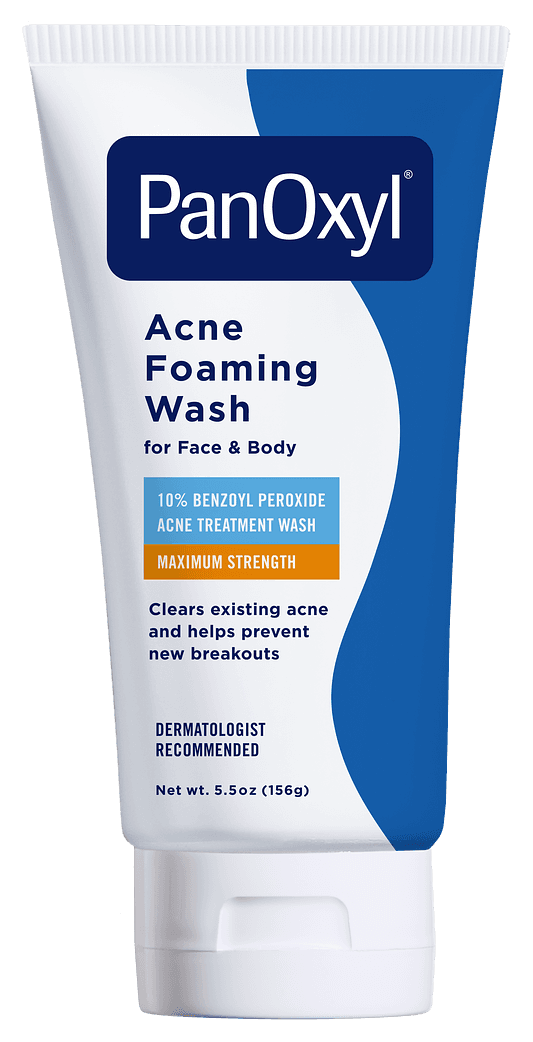
10% benzoyl peroxide, the most the FDA allows without a prescription, in a fragrance-free wash for acne on the face, chest and back. It can dry and irritate and it bleaches towels, so for most faces PanOxyl's own 4% Creamy Wash is the better start.
- 10% benzoyl peroxide, the OTC maximum
- No fragrance on the list
- Massage 1 to 2 minutes, then rinse
Is it good? Our verdict
Yes, for acne on the chest and back, and on the face if your skin is not sensitive. It is 10% benzoyl peroxide, the most the FDA allows without a prescription, in a wash with no fragrance that you massage in for 1 to 2 minutes and rinse. We found no trial showing 10% clears acne better than lower strengths, and in the classic comparison 10% irritated more, so most faces should start with PanOxyl's 4% Creamy Wash. It bleaches towels and clothes.
- 10% benzoyl peroxide
- No added fragrance
- Sulfate-free
Pros and cons
Pros
- 10% benzoyl peroxide, the most the FDA allows without a prescription; the AAD strongly recommends benzoyl peroxide for acne
- No fragrance and no parabens on the list
- One tube for the face, chest and back, with a short contact time: massage 1 to 2 minutes, then rinse
- Glycerin and dimethicone in the base; the carton says it contains moisturizers to help prevent dryness
Cons
- Can dry and irritate: the label says start once a day, and not to use it on very sensitive skin
- We found no trial showing 10% works better than 4% or 2.5%, and none of this wash's effect on acne
- Bleaches towels, sheets, dyed clothes and hair
- Its inactive list is alphabetical, so it says nothing about amounts
Who it is for
It is the best 10% benzoyl peroxide wash in our acne face wash guide, picked for face and body. Here is who it suits:
Good for
- Acne on the chest, back and shoulders
- Oily, acne-prone skin that already tolerates benzoyl peroxide
- Anyone avoiding fragrance
- A routine with adapalene (Differin), a pairing the AAD suggests
Skip it if
- Your skin is very sensitive: the label says not to use it
- You are new to benzoyl peroxide and it is for your face: start with a lower strength
- Your acne is deep, painful or scarring: see a dermatologist
- You can't keep it off colored towels, pillowcases and clothes
The version we reviewed
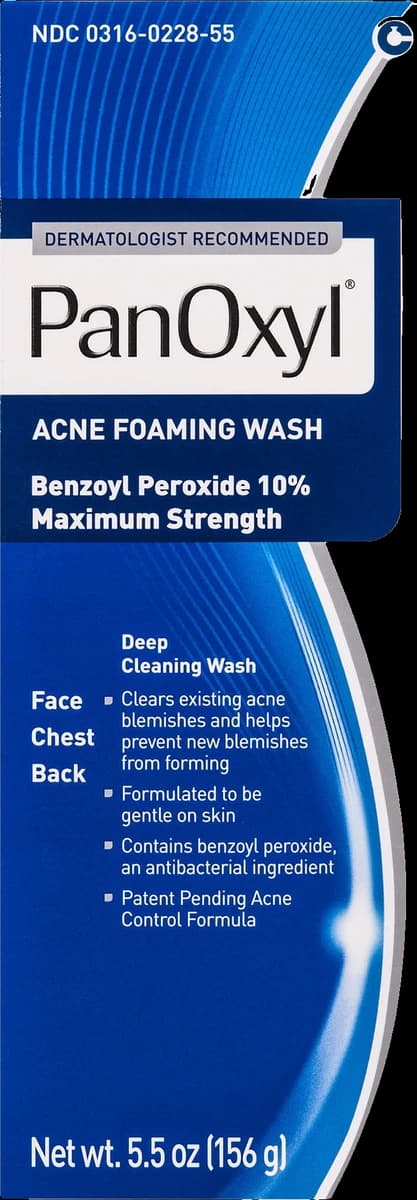
PanOxyl’s carton, its tube, the typed text of its official label and its website do not print the same ingredient list, and some store pages that rank for this wash still show a formula retired in 2017. This review covers the 10% wash sold in the US today and reads every fact from the newest printed list, the carton’s.
Version reviewed
- Product
- PanOxyl Acne Foaming Wash, 10% Benzoyl Peroxide, Maximum Strength; Net wt. 5.5 oz (156 g) tube
- Market
- United States; distributed by Crown Laboratories
- Drug Facts
- 10% benzoyl peroxide, an OTC acne drug, read on DailyMed (label version 4, January 2026) on October 7, 2026
- Ingredient list
- 21 inactive ingredients on the carton, in alphabetical order
- Barcode
- 303160228551, the UPC on the 5.5 oz carton; it carries the drug code NDC 0316-0228-55
- Directions
- Massage into wet skin for 1 to 2 minutes, rinse; once a day at first, up to 2 or 3 times
- List history
- This base since a “New Formula” tube in November 2017; oleic acid joined the printed list in July 2024
- Other lists
- The tube, the typed label text and panoxyl.com each print a slightly different list
Sources: DailyMed, with the label as archived in November 2017, July 2024 and November 2025, and PanOxyl’s product page. Formulas change; check your pack.
Label facts for PanOxyl Acne Foaming Wash
- Acne active
- Benzoyl peroxide 10%, in the Drug Facts box
- Label
- OTC acne drug (Drug Facts box)
- Added fragrance
- None listed
- Drying alcohol
- None listed
- Sulfates
- None listed
- Supporting
- Glycerin
- Cruelty-free certified
- No
Read from the US Drug Facts label on DailyMed on October 7, 2026. US acne washes print the active’s percentage in a Drug Facts box; their other ingredients may be listed alphabetically, so these label facts report only whether something is there. Formulas change; check your box. Cruelty-free certification: the Leaping Bunny and Cruelty Free International directories on October 6, 2026.
PanOxyl Acne Foaming Wash ingredients: the full list, mapped
The active ingredient: 10% benzoyl peroxide, printed in the Drug Facts box. The inactive ingredients, as the carton prints them: Aqua, Carbomer Homopolymer Type C, Carbomer Interpolymer Type A, Decyl Glucoside, Dimethicone, Dioctyl Sodium Sulfosuccinate, Glycerin, Oleic Acid, Palmitic Acid, Polyacrylate Crosspolymer-6, Polyoxyl 40 Stearate, Propanediol, Silica, Sodium Chloride, Sodium Citrate, Sodium Hydroxide, Sodium Laurylglucosides Hydroxypropylsulfonate, Sorbitan Stearate, Stearic Acid, t-Butyl Alcohol, Xanthan Gum.
Benzoyl peroxide does the work: the label’s only use is the treatment of acne. Everything else makes the foam, thickens it, softens the rinse and keeps the pH steady. Below, each inactive ingredient in the carton’s order, colored by what it does. New to reading a list? Start with our guide to reading an ingredients list.
- Cleansers and emulsifiers
- Humectant
- Fatty acids and a silicone
- Base: texture, pH and stability
Inactive ingredients, A to Z, as the carton prints them: the order says nothing about amounts
- 1Aqua (water)
- 2Carbomer Homopolymer Type C
- 3Carbomer Interpolymer Type A
- 4Decyl Glucoside, Cleansers and emulsifiers
- 5Dimethicone, Fatty acids and a silicone
- 6Dioctyl Sodium Sulfosuccinate, Cleansers and emulsifiers
- 7Glycerin, Humectant
- 8Oleic Acid, Fatty acids and a silicone
- 9Palmitic Acid, Fatty acids and a silicone
- 10Polyacrylate Crosspolymer-6
- 11Polyoxyl 40 Stearate, Cleansers and emulsifiers
- 12Propanediol
- 13Silica
- 14Sodium Chloride
- 15Sodium Citrate
- 16Sodium Hydroxide
- 17Sodium Laurylglucosides Hydroxypropylsulfonate, Cleansers and emulsifiers
- 18Sorbitan Stearate, Cleansers and emulsifiers
- 19Stearic Acid, Fatty acids and a silicone
- 20t-Butyl Alcohol
- 21Xanthan Gum
Why the order tells you nothing
On a moisturizer or serum, the list runs from most to least, at least above 1%. On this wash it runs A to Z, as the FDA requires for a drug that is not also a cosmetic (21 CFR 201.66). So glycerin 7th and t-butyl alcohol 20th say nothing about how much of either is in the tube. Sites that rank its “top” ingredients are reading the alphabet.
What cleans, and what softens
Five ingredients make the foam and lift oil: decyl glucoside and sodium laurylglucosides hydroxypropylsulfonate, two cleansers made from sugar; dioctyl sodium sulfosuccinate, a wetting agent better known as docusate sodium (FDA substance registry); and two emulsifiers, polyoxyl 40 stearate and sorbitan stearate. The list has no sulfate. Glycerin draws water into the skin, and dimethicone with oleic, palmitic and stearic acid soften the rinse; the carton says the wash “contains moisturizers to help prevent dryness”. Silica is on the list, but PanOxyl never calls this a scrub, and neither do we.
t-Butyl alcohol: a solvent, likely from the thickener
t-Butyl alcohol, 20th on the list, is a small solvent alcohol. It is not ethanol, the drying alcohol, and the EU’s ingredient database lists it as a solvent and denaturant, not as an astringent (CosIng). It most likely comes in with the thickener: the polyacrylate crosspolymer-6 coded on PanOxyl’s label is sold as Sepimax Zen (FDA substance registry), whose safety sheet lists 1 to 5% t-butyl alcohol (Seppic). Crown has not said so, and the amount in the wash is not disclosed.
What it does not have
No fragrance, essential oil, paraben, sulfate or dye, and no exfoliating acid such as glycolic or salicylic acid. The carton says “Free from Parabens, Fragrances and Phthalates”. It also has none of the barrier ingredients CeraVe adds: no ceramide, niacinamide or hyaluronic acid, which is where CeraVe’s 4% wash differs most.
Four ingredient lists for one wash
We read every place PanOxyl prints this wash’s ingredients. They do not agree:
- The carton lists 21 inactive ingredients, including oleic acid and t-butyl alcohol. It is the newest printed list, from November 2025, and the one on this page (DailyMed, 2025).
- The tube in the same official label prints the same list without t-butyl alcohol: 20 entries. Its art dates from July 2024, when t-butyl alcohol left both tube and carton (DailyMed, 2024). Amazon’s listing prints this 20-entry list too.
- The typed Drug Facts text on DailyMed says “purified water”, leaves out oleic acid and adds sorbitol (DailyMed). No printed 10% list we found, from 2011 on, has sorbitol, and this typed list matches, word for word, the typed list the 4% wash had in April 2024, when the 10% got its own label (DailyMed, 2024), so it looks like a copy error.
- PanOxyl’s website showed no inactive list at all from at least September 2024 to June 2026 (archived page), then restored the list it showed until July 2024: 20 entries, “purified water” and no oleic acid (PanOxyl, 2019 copy).
The differences are small, and none touches the active, but they matter if you check a list for something you avoid: oleic acid, a fatty acid, is on the carton and the tube and missing from the website. We found no explanation from PanOxyl; whether the 2024 change was a new formula or a corrected label, the label does not say. Trust the carton in your hand.
Is PanOxyl good for your face?
It can be, if your skin is not sensitive. The tube says “for Face & Body” and the label’s use is acne. Four things to know before it goes on your face:
- 10% is the top of the range, not the start. The AAD suggests starting benzoyl peroxide at 2.5% to avoid dryness, irritation and burning (AAD), and PanOxyl’s FAQ says best practice is to start with the lowest percentage (PanOxyl). Its 4% Creamy Wash is the same base; see 10% vs 4%.
- The label rules out very sensitive skin: “Do not use if you have very sensitive skin” (Drug Facts).
- Keep it off your eyes and lips. The label says so, and Wirecutter’s testers found the wash too harsh and irritating, especially around the eyes (Wirecutter). A 2025 Reddit thread describes swollen eyelids after a benzoyl peroxide wash (thread).
- Dryness is the trade-off. The label’s answer is to use it less often; most people add a plain moisturizer after rinsing.
How long to leave PanOxyl on
The label says to massage it into wet skin for 1 to 2 minutes and rinse thoroughly (Drug Facts). The FDA’s rules for acne washes set no contact time, so those minutes are PanOxyl’s own direction (21 CFR 333.350). What the studies suggest:
- Too short does little on the back. On the back, an 8% wash left on about 20 seconds and rinsed did not cut acne bacteria after 2 weeks, while a leave-on foam did (Leyden, 2010). A 9.8% foam left on 2 minutes cut them about as much as a leave-on product (Leyden and Del Rosso, 2012).
- On the back, the AAD says 2 to 5 minutes before rinsing, to get through the back’s thicker skin (AAD). On the face, follow the label’s 1 to 2 minutes.
- Not overnight. It is a rinse-off wash. Leave-on benzoyl peroxide gels exist for that; this one’s label says to rinse it off, and it would bleach your pillowcase.
On Reddit, the times people report run from a 60-second wash to 10 minutes; one user who tried both strengths thinks “washing off the product barely has an effect” (thread).
PanOxyl 10% vs 4% Creamy Wash
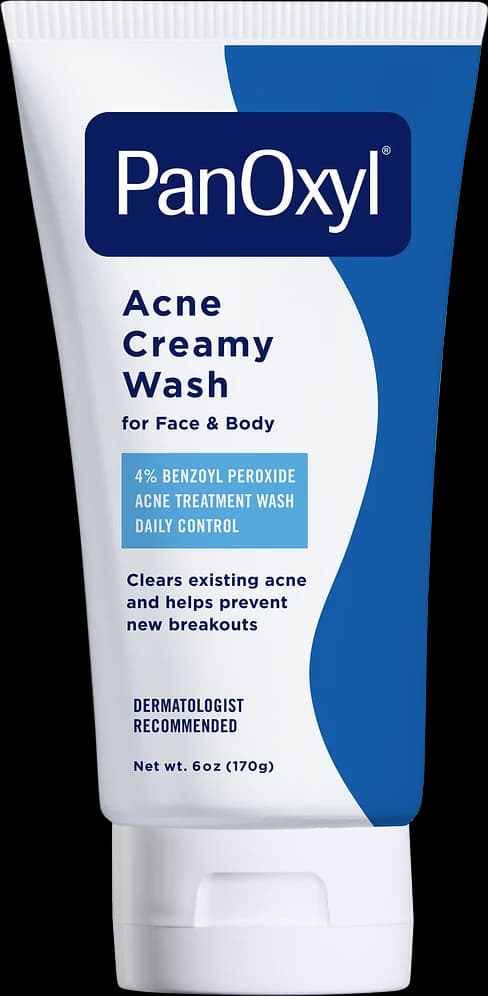
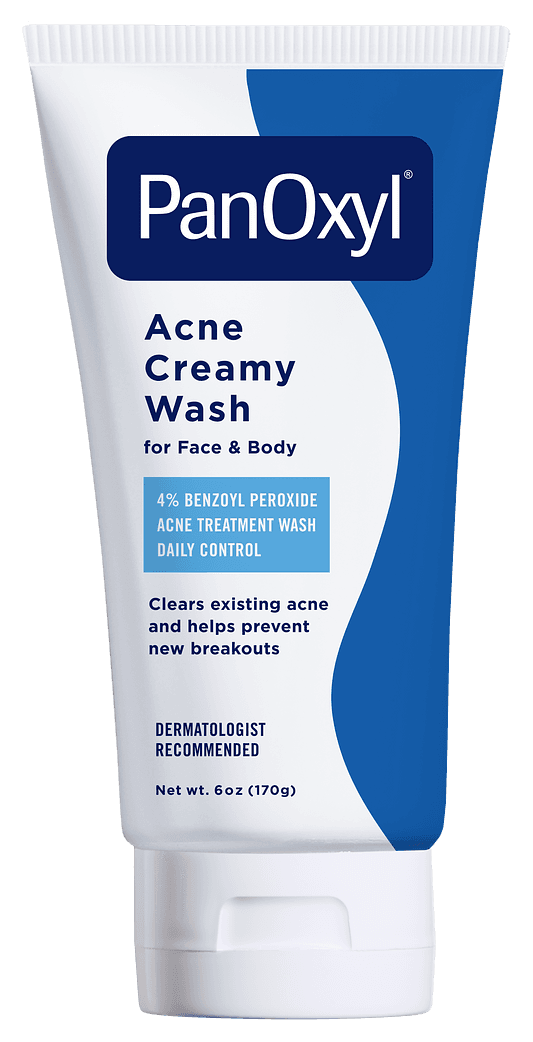
The two tubes look like different products, but their lists are nearly the same. The 10% label uses pharmacy names and the 4% label cosmetic ones: dioctyl sodium sulfosuccinate is diethylhexyl sodium sulfosuccinate (FDA substance registry), polyoxyl 40 stearate is PEG-40 stearate, and the 4%’s single “carbomer” is coded on its label as the same two carbomers the 10% names (DailyMed). Matched up, the 4% lists the 10%’s 20 ingredients plus sorbitol, a humectant. Both lists are alphabetical, so the amounts of each can still differ.
| Label fact | PanOxyl Acne Foaming Wash | PanOxyl Acne Creamy Wash |
|---|---|---|
| Benzoyl peroxide | 10% benzoyl peroxide | 4% benzoyl peroxide |
| On the front | “Maximum Strength” | “Daily Control” |
| Inactive ingredients | 21, in alphabetical order | 21, in alphabetical order |
| Once the names are matched | The 4% list without sorbitol | The 10% list plus sorbitol |
| Contact time on the label | Massage 1 to 2 minutes, then rinse | Massage 1 to 2 minutes, then rinse |
| How often | Once a day at first, up to 2 or 3 times | Once a day at first, up to 2 or 3 times |
| Size | 5.5 oz (156 g), also 3 oz and 1 oz | 6 oz (170 g) |
| Added fragrance | None listed | None listed |
| Where to buy |
Does 10% work better? We found no trial showing it does. In the classic comparison, three double-blind studies of leave-on gels in 153 people, 2.5% matched 5% and 10% on inflammatory acne and caused less irritation than 10% (Mills, 1986). A 2020 Cochrane review of 120 trials called for more studies comparing strengths (Yang, 2020). The one point for 10% in a wash: in a lab dish, 10% and 5% killed acne bacteria within 30 seconds, while 2.5% took 15 minutes (Boonchaya, 2022), which may matter when the wash is rinsed off in minutes. That has not been tested on skin.
Which should you buy? For your face, especially if you are new to benzoyl peroxide, the 4%, as PanOxyl itself advises (PanOxyl). For the chest and back, or a face that already tolerates benzoyl peroxide, the 10%. On Reddit, 8 of the 12 commenters we read who compared strengths favored a strength below 10%, several because the 10% dried them out.
PanOxyl vs CeraVe Acne Foaming Cream Cleanser
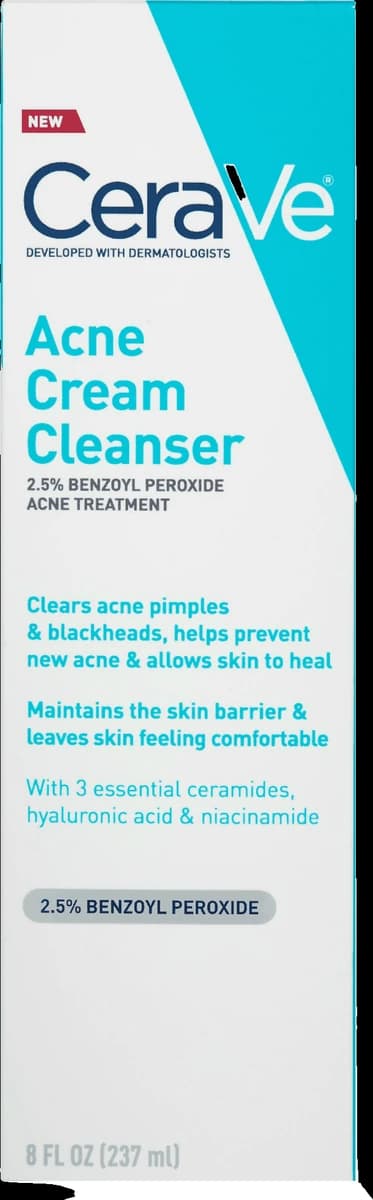
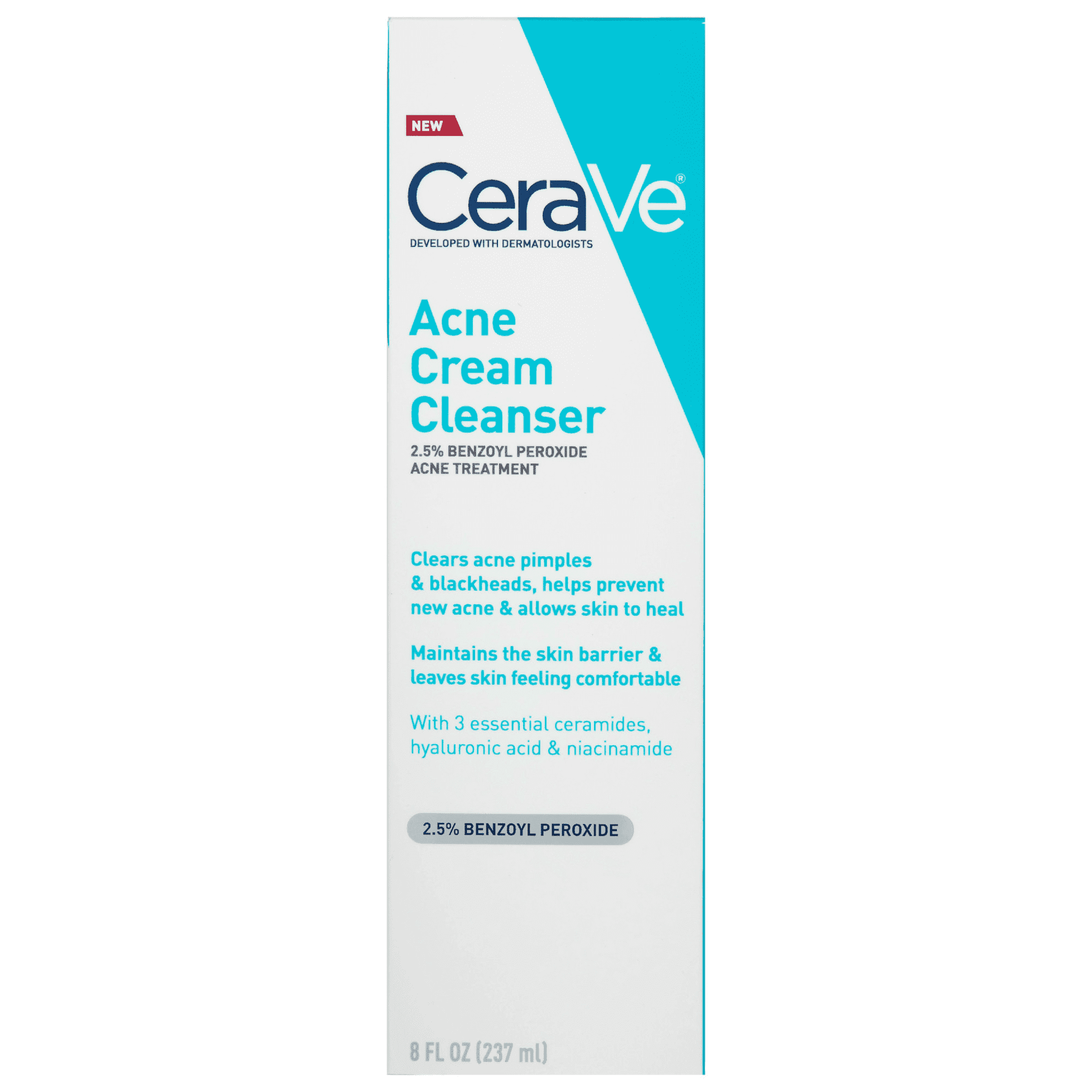
CeraVe’s benzoyl peroxide wash is the best overall pick in our acne face wash guide. It takes the opposite approach: a lower strength with barrier ingredients added.
| Label fact | PanOxyl Acne Foaming Wash | CeraVe Acne Foaming Cream Cleanser |
|---|---|---|
| Benzoyl peroxide | 10% benzoyl peroxide | 4% benzoyl peroxide |
| Inactive ingredients | 21, in alphabetical order | 27, not alphabetical |
| Ceramides, niacinamide, hyaluronic acid | None listed | Three ceramides, niacinamide, sodium hyaluronate |
| Glycolic acid | Not listed | Listed, 13th of 27 |
| Contact time on the label | Massage 1 to 2 minutes, then rinse | None given: massage, then rinse |
| In our acne wash guide | Best 10% wash, for face and body | Best overall |
| Added fragrance | None listed | None listed |
| Where to buy |
Both lists are read from the US Drug Facts on DailyMed (PanOxyl, CeraVe). CeraVe’s list is not alphabetical and PanOxyl’s is, so a place on one list cannot be compared with a place on the other. We found no trial that compares the two.
Which should you buy? For a face that is new to benzoyl peroxide or prone to dryness, CeraVe. For body acne or oily skin that tolerates benzoyl peroxide, PanOxyl.
Is it the same PanOxyl as before? Not since 2017
PanOxyl began at Stiefel Laboratories, which first used the name in 1972 (USPTO). GSK bought Stiefel in 2009 (GSK), and Crown Laboratories bought the North American rights in November 2018 (Crown, 2018). The label history, version by version:
- Until late 2017, a different wash. Stiefel’s 10% foaming wash listed methylparaben, imidurea, sodium lauryl sulfate, mineral oil, and glycolic and lactic acid (DailyMed, 2016). Some store pages still show that list (example).
- November 2017: “New Formula”. Under GSK, the tube gained a New Formula banner and today’s base: carbomer, decyl glucoside, t-butyl alcohol and the rest (DailyMed, 2017). A year earlier, GSK had tested two new 4% and 10% washes against the PanOxyl 10% then on sale (GSK study 206239); we could not confirm that the tested 10% is the one sold today.
- 2018: Crown’s labels. The same base, now in pharmacy names (DailyMed, 2018).
- 2024 and 2025: small list changes. In July 2024 the printed list switched to “Aqua”, gained oleic acid and dropped t-butyl alcohol; the November 2025 carton put t-butyl alcohol back (DailyMed, 2024, 2025). Crown has not said whether these were formula changes.
Does PanOxyl work? What the studies show
- Benzoyl peroxide, yes. The AAD’s 2024 guidelines make a strong recommendation for it (Reynolds, 2024; several authors report industry ties). A 2020 Cochrane review of 120 trials found it beat placebo on people’s own ratings, with low-certainty evidence; 50 of the trials were paid for by industry and 63 did not say (Yang, 2020).
- Washes, less clear. A 2018 review found too few well-done studies of washes and cleansers to make reliable recommendations (Stringer, 2018). In one small 1989 crossover, a 10% benzoyl peroxide wash did not significantly reduce blackheads and whiteheads, while a 2% salicylic acid cleanser did (Shalita, 1989). Contact time matters on the back, as above.
- PanOxyl’s washes: irritation only. The one study we found that used a PanOxyl wash was GSK’s, run in 2016 and 2017 while GSK owned PanOxyl: 133 people used two new 4% and 10% washes or the PanOxyl 10% Foaming Wash then on sale (the formula before today’s) twice a day for 21 days, massaged in for 1 to 2 minutes, and irritation scores barely changed in any group (GSK, Santos-Caetano, 2019). It did not measure acne, and we could not confirm that either new wash is the one sold today. We found no trial of this wash’s effect on acne.
- The “99% in 15 seconds” claim rests on an unpublished “Independent Laboratory Study, Data on File” (PanOxyl).
Bottom line: it delivers an acne ingredient the AAD strongly recommends, at the highest strength sold without a prescription, but we found no trial of this wash on acne and no proof that 10% beats a lower strength.
PanOxyl and benzene: what is known
Benzene, a carcinogen, is not an ingredient, but it can form as benzoyl peroxide breaks down, more so with heat. What we found about this wash:
- It was in Valisure’s heat test. In March 2024 the testing lab Valisure asked the FDA to act on benzene in benzoyl peroxide products. Its 18-day test at 50 °C (122 °F) includes a “10.0% PanOxyl Cream” with this wash’s UPC, 303160228551. Its chart shows that wash’s benzene rising past 150 parts per million within 14 days; many of the 66 products heated rose too, some far higher. Valisure printed no table of values and no lot number (Valisure); its own published study, paid for by Valisure, tested other brands (Kucera, 2024). The FDA says a drug batch should not be released with more than 2 ppm of benzene (FDA), and it has not ruled on the petition (FDA, 2024).
- It was not recalled. The FDA tested 95 benzoyl peroxide products itself, found more than 90% had undetectable or extremely low benzene, and six were voluntarily recalled at the retail level; PanOxyl was not among them, though the FDA did not publish the full list (FDA, 2025). We found no PanOxyl recall in the FDA’s recall data through September 2026 (openFDA).
- Washes ran higher than leave-ons in an analysis of 111 products that Valisure tested at room temperature (PanOxyl was not among them), while strength made no difference (Barbieri, 2025).
- No cancer signal so far in a large study of people prescribed benzoyl peroxide, though it did not capture store-bought use (Garate, 2024).
- A lawsuit is pending. A proposed consumer class action over benzene in PanOxyl products has been in federal court in California since 2024; its claims are unproven, and in August 2025 the court said it was inclined to dismiss the case but allowed an amended complaint (docket). We found no statement on benzene from PanOxyl.
What to do: the AAD advises storing benzoyl peroxide products at room temperature or cooler, replacing them every 10 to 12 weeks, and throwing out any left in heat above about 78 °F (AAD, AAD statement); a hot car counts. The label itself says to store it at 68 to 77 °F. If you would rather avoid benzoyl peroxide, our salicylic acid cleanser picks are the usual alternative.
What the label can’t tell you
- How much of any inactive ingredient there is. The list is alphabetical.
- Whether the 2024 list changes were a new formula. Crown has not said.
- How much benzene your tube holds. That depends on its age and how it was stored, which no label shows.
- How it will feel on your skin. We did not test it on skin. What people who used it say is below.
PanOxyl Acne Foaming Wash reviews on Reddit
PanOxyl is everywhere on Reddit: r/acne alone has 5,621 comments that name it, from 2012 to October 2026, and most do not say which strength. We read every comment in 8 threads about experiences with PanOxyl and scored each personal verdict: 71 of 112 said it worked, 12 were mixed and 29 said it did not work or they stopped; 7 more were in their first weeks. One thread was chosen because it asked whether to keep going. Opinions are not evidence, but they show what to expect:
- Most do not say which PanOxyl. Only 18 of the 112 named the 10% alone; 13 of those said it worked, 4 were mixed and 1 did not. Another 16 named a 4% PanOxyl, mostly the Creamy Wash, and 2 had tried both; the poster of one thread asking whether PanOxyl works was using the 4% (2025 thread).
- Body yes, face sometimes. Of 23 verdicts that mention the body, 15 said it worked; 6 of those 7 mixed verdicts said it was good on the body but too harsh, or no help, on the face. “I love it for body acne but man does it bleach the hell out of my clothes” (2024 thread).
- Dryness, and around the eyes. 18 verdicts mention dryness or peeling, and 5 users say it did not dry them out. One wrote: “It just really dries my skin out around my eyes so I have to only use it a few times a week now” (2023 thread).
- Contact time is all over the place. 19 users give a time, from “i just wash my face for 60 seconds then rinse it off” (2021 thread) to “I aim for 10 minutes before rinsing” (2025 thread).
- Allergic reactions, rare but real. 4 people stopped after what they called an allergic reaction, 3 of them describing swelling or itching: “I had an allergic reaction to this. My face became itchy and red and swollen” (2021 thread).
- Patience. Reported times to results run from days to months: “I didn’t see huge results until month 3 or 4 though” (2023 thread). And some never saw any: “I was recommended it by two different derms and was utterly disappointed” (same thread).
- The 4% for faces. 8 of the 12 who compared strengths favored a strength below 10%: “I would’ve gotten the 4% cause it doesn’t dry out your face so much” (same thread).
- Body odor. Outside the acne subreddits, r/Hygiene uses PanOxyl for underarm odor; its PanOxyl comments jumped from 28 in 2023 to 242 in the first half of 2024, and its most-upvoted PanOxyl post is about PanOxyl’s bar soap (thread).
How to use PanOxyl Acne Foaming Wash
- Patch-test first. Use it on one or two small areas for 3 days, as the FDA suggests after rare but serious allergic reactions to OTC acne products (FDA).
- Wet the skin, massage it in for 1 to 2 minutes, rinse thoroughly and pat dry, as the label says. On the back, the AAD suggests 2 to 5 minutes before rinsing.
- Once a day at first, going up to 2 or 3 times a day only if needed; if dryness or peeling bothers you, cut back to once a day or every other day.
- Moisturize after with a plain, fragrance-free moisturizer, and in the morning wear sunscreen: the label says to apply it after the wash if you go outside.
- Keep it away from your eyes, lips, mouth and hairline, and use white towels and pillowcases: it bleaches hair and dyed fabric.
- One acne medication at a time if your skin gets irritated, as the label says. With tretinoin, the simplest plan is the wash in the morning and tretinoin at night.
- Store it cool: the label says 68 to 77 °F, so not in a hot car or on a sunny windowsill. Replace it every 10 to 12 weeks, as the AAD advises for benzoyl peroxide.
- Give it 4 to 6 weeks before judging it (AAD), and see a dermatologist if your acne is deep or painful (AAD). If irritation becomes severe, stop and ask a doctor, as the label says.
Alternatives worth a look
PanOxyl Acne Creamy Wash
A lower strength: 4% benzoyl peroxide in the same base plus sorbitol, with the same 1-to-2-minute directions. The start PanOxyl itself suggests.
CeraVe Acne Foaming Cream Cleanser
4% benzoyl peroxide with three ceramides, niacinamide and hyaluronic acid. Our best overall acne face wash.
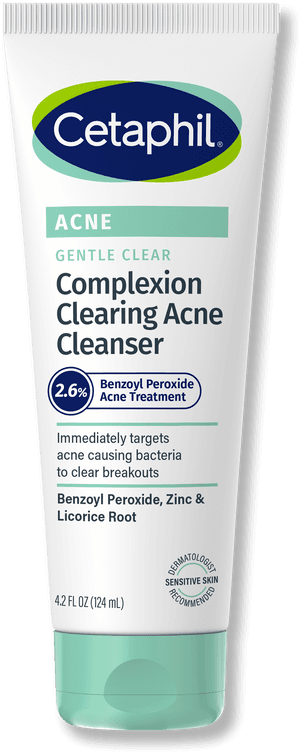
Cetaphil Gentle Clear Complexion Clearing Acne Cleanser
2.6% benzoyl peroxide, the lowest benzoyl peroxide strength of any wash we read, with zinc gluconate and dipotassium glycyrrhizate, from licorice root. Our best for sensitive skin.
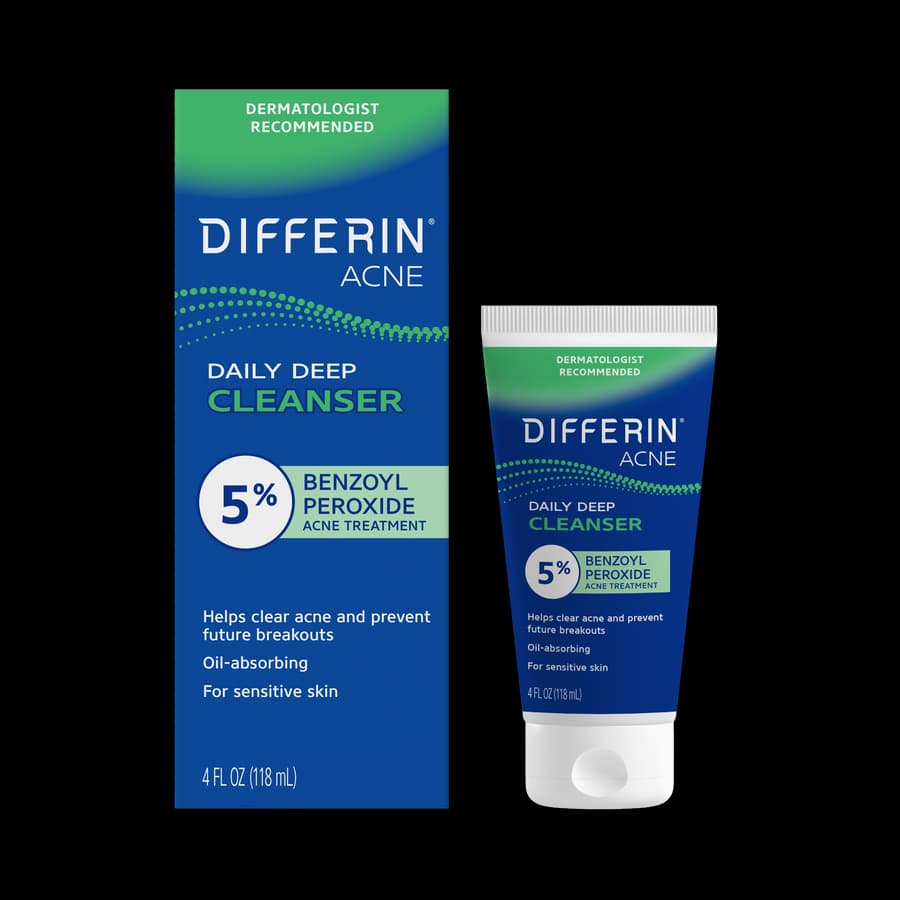
Differin Daily Deep Cleanser 5% Benzoyl Peroxide
5% benzoyl peroxide with a short list of six inactive ingredients. Our best for a short ingredient list.
How we reviewed it, and why you can trust it
We read the US Drug Facts on DailyMed, including the carton and tube images, every archived version of the label from Stiefel’s in 2011 to today’s, every archived copy of PanOxyl’s product page since 2015, the Amazon listing our button opens, and the labels of the 4% Creamy Wash and CeraVe’s wash. We read every study we found of benzoyl peroxide strength and washes, GSK’s 2016 study of PanOxyl washes, the FDA’s rules and benzene findings, Valisure’s petition, the reviews that rank on Google’s first page, and Reddit through an archive.
- Every ingredient position, count and flag from today’s US labels is generated from them, not typed by hand.
- Every health claim links to its source, and studies paid for by a company say so.
- PanOxyl did not pay for this review or send us a product, and commission never decides what we say.
- We did not test it on skin, so there is no star rating.
Our full method explains what we check and why. For more options, read our best face washes for acne.
Questions people ask
Is PanOxyl Acne Foaming Wash good for acne?
Yes on paper, for acne on the chest and back and on faces that are not sensitive. It is 10% benzoyl peroxide, the most the FDA allows without a prescription (21 CFR 333), and the AAD’s 2024 guidelines strongly recommend benzoyl peroxide for acne (Reynolds, 2024). Its list has no fragrance. We found no trial of this wash’s effect on acne, and none showing 10% beats lower strengths; Wirecutter’s testers found it too harsh, especially around the eyes (Wirecutter). We did not test it on skin.
Can you use PanOxyl Acne Foaming Wash on your face?
Yes: the tube says “for Face & Body” and the label’s use is “for the treatment of acne” (Drug Facts). But the label also says not to use it if you have very sensitive skin, and to keep it away from the eyes, lips and mouth. The AAD suggests starting benzoyl peroxide at 2.5% to avoid dryness and irritation (AAD), and PanOxyl’s own FAQ says best practice is to start with the lowest percentage (PanOxyl), which for its washes is the 4% Creamy Wash. See our face section.
How long do you leave PanOxyl on?
The label says to massage it into wet skin for 1 to 2 minutes, then rinse thoroughly (Drug Facts). On the back, the AAD says benzoyl peroxide works best left on for 2 to 5 minutes before rinsing. It is a wash, not a leave-on treatment, so we would not leave it on overnight: the label says to rinse, irritation is its main side effect, and it would bleach your pillowcase. More in how long to leave it on.
What is the right way to use PanOxyl 10%?
As the label says: wet the skin, massage the wash in for 1 to 2 minutes, rinse thoroughly and pat dry. Start once a day, and go up to 2 or 3 times a day only if needed; if dryness or peeling bothers you, cut back to once a day or every other day. If you go outside, put sunscreen on after it (Drug Facts). Our step-by-step adds a 3-day patch test and a white towel.
Should I use PanOxyl in the morning or at night?
Either: the label sets how often, not when. Using it in the morning makes the label’s sunscreen step easy. If you use prescription tretinoin, benzoyl peroxide broke tretinoin down in a lab mix under light, in a test by Galderma, which makes adapalene (Martin, 1998), so a common plan is the wash in the morning and tretinoin at night; in a trial paid for by tretinoin’s maker, a 5% wash and a tretinoin gel both used in the morning did as well as morning and night (Pariser, 2010). In that same Galderma test, adapalene (Differin) stayed stable with benzoyl peroxide.
How long does PanOxyl take to work?
Weeks, not days. The AAD says to give an acne treatment at least 4 weeks, expect some improvement in 4 to 6 weeks, and allow 2 to 3 months or more to clear (AAD); PanOxyl’s FAQ says 4 to 6 weeks (PanOxyl). On Reddit, people we read reported anything from a day to 8 months: “It took me 6 months to be happy with my results” (thread).
PanOxyl 4% vs 10%: which should I use?
For most faces, start with the 4%. Once the ingredient names are matched, the two washes list the same 20 ingredients, with sorbitol added to the 4%, and share the same directions. In the classic study of strengths, 2.5% gel reduced inflammatory acne as much as 5% and 10%, with less irritation than 10% (Mills, 1986). PanOxyl itself says to start with the 4% and move up only if needed (PanOxyl). The 10% suits the chest and back, or skin that already tolerates benzoyl peroxide. See the side-by-side.
PanOxyl vs CeraVe: which acne wash is better?
For a face new to benzoyl peroxide, CeraVe’s lower strength; for the body, PanOxyl. CeraVe’s Acne Foaming Cream Cleanser has 4% benzoyl peroxide with three ceramides, niacinamide and hyaluronic acid, and is our best overall acne face wash; PanOxyl has 10% benzoyl peroxide and none of those. We found no trial that compares them. See the comparison.
Does PanOxyl bleach skin?
No, according to the AAD, which says benzoyl peroxide does not lighten skin but will bleach clothing, sheets, pillowcases and towels (AAD). The label warns it may bleach hair and dyed fabrics (Drug Facts). PanOxyl’s FAQ adds that skin lightening can occur from the washes’ exfoliating effect, without a source (PanOxyl). Benzoyl peroxide is a strong oxidizer, which is what strips dye. Use white towels and pillowcases, and rinse well, including your hairline.
Can you use PanOxyl every day?
Yes, the label is written for daily use: start with one application a day, go up to 2 or 3 if needed, and cut back to once a day or every other day if dryness or peeling bothers you (Drug Facts). PanOxyl’s own website says up to twice a day (PanOxyl).
What are the side effects of PanOxyl?
The label lists redness, burning, itching, peeling and possibly swelling, and says irritation is more likely with another acne medication at the same time (Drug Facts). Rare but serious allergic reactions to OTC acne products led the FDA to suggest testing a small area for 3 days first (FDA, 2014). In a German patch-test network, 1.3% of 29,758 patients tested had a strong reaction to benzoyl peroxide, though its authors found acne products seem to cause allergy rarely (Ockenfels, 2009). It also bleaches fabric, and the label asks you to avoid unnecessary sun and wear sunscreen.
What should you avoid when using PanOxyl?
The label lists it: keep it off your eyes, lips and mouth, and away from hair and dyed fabrics, which it may bleach; avoid unnecessary sun and use a sunscreen; and do not use it if you have very sensitive skin or are sensitive to benzoyl peroxide. Irritation and dryness are more likely with another topical acne medication at the same time, so if irritation occurs, use one at a time (Drug Facts). Keep the tube out of heat: the label says to store it at 68 to 77 °F, and the AAD advises throwing out benzoyl peroxide left above about 78 °F.
Is PanOxyl good for sensitive skin?
Not by its own label, which says “Do not use if you have very sensitive skin” (Drug Facts). If your skin is easily irritated, start with a lower strength, such as PanOxyl’s 4% or Cetaphil’s 2.6% cleanser, our pick for sensitive skin, and patch-test first.
Does PanOxyl cause purging?
Some Reddit users say so: among the verdicts we scored, 6 of 112 described getting worse before getting better, and 1 more got worse and stopped (see Reddit reviews). “Purging” is PanOxyl’s word for it (PanOxyl); we found no AAD page or published study that uses it for benzoyl peroxide. The AAD says to give a treatment 4 to 6 weeks before judging it (AAD). If new breakouts keep coming after 6 weeks, or your skin burns or swells, stop and ask a dermatologist.
Is PanOxyl good for back acne, and how do you use it there?
Yes, it is a good fit. The label says to massage it into wet skin for 1 to 2 minutes and rinse (Drug Facts); on the back, the AAD suggests leaving a benzoyl peroxide wash on for 2 to 5 minutes before rinsing, and names 10% as the strongest without a prescription (AAD). Allure named it the best body wash for acne in its 2024 Best of Beauty awards (Allure). On Reddit, 15 of 23 verdicts that mentioned the body said it worked. Expect bleached towels and shirts.
Can I use PanOxyl with retinol, tretinoin or adapalene?
With care. The label warns irritation is more likely with another acne medication at the same time. The AAD pairs benzoyl peroxide with adapalene (AAD), which stayed stable with it in a lab test by Galderma, the maker of adapalene (Martin, 1998). Tretinoin broke down when mixed with benzoyl peroxide under light in that same test, so many people use the wash in the morning and tretinoin at night; in one trial paid for by tretinoin’s maker, a microsphere tretinoin gel worked as well with both in the morning (Pariser, 2010). For retinol, apply it at night and keep the wash for the morning. More in our guide to which ingredients not to mix.
Do I need a moisturizer after PanOxyl?
Most people will want one. The carton says the wash contains moisturizers to help prevent dryness, but the label still warns of dryness, and its fix is to use the wash less often. A plain, fragrance-free moisturizer after rinsing helps; see our face moisturizer picks. One Reddit user put it simply: “make sure you moisturize a lot with this 10%” (thread).
Can I use PanOxyl while pregnant or breastfeeding?
Experts consider benzoyl peroxide safe in limited amounts during pregnancy, the AAD says, but talk with your obstetrician or dermatologist before using it (AAD); the label says to ask a health professional before use if you are pregnant or breast-feeding (Drug Facts). For breastfeeding, the NIH’s LactMed says about 5% is absorbed through the skin, calls it a low risk to the nursing baby, and advises keeping the baby’s skin off treated areas (LactMed).
Does PanOxyl contain benzene? Was it recalled?
Benzene is not an ingredient, but it can form from benzoyl peroxide, more with heat. In a 2024 test by the lab Valisure, a tube with this wash’s UPC formed benzene during 18 days at 50 °C (122 °F), as most of the 66 products it heated did (Valisure). PanOxyl was not on the FDA’s March 2025 recall list after its own tests of 95 products (FDA), and we found no PanOxyl recall in the FDA’s recall data (openFDA). The AAD advises storing these products cool, replacing them every 10 to 12 weeks, and throwing out any left in heat above about 78 °F (AAD). Details in our benzene section.
Can you use PanOxyl on your armpits for body odor?
People do, but it is not what the label is for: its only use is acne. We found no published study of benzoyl peroxide for underarm odor; a 2-week trial of benzoyl peroxide gels for a foot infection, pitted keratolysis, found foot odor dropped (Leeyaphan, 2021). PanOxyl’s blog promotes the washes for underarms without citing a study (PanOxyl), and r/Hygiene is full of the tip; its most-upvoted PanOxyl post is about PanOxyl’s bar soap (thread). Patch-test first, rinse well and wear white: it bleaches shirts.
What are the ingredients in PanOxyl Acne Foaming Wash?
The active is 10% benzoyl peroxide. The carton lists 21 inactive ingredients, alphabetically: Aqua, Carbomer Homopolymer Type C, Carbomer Interpolymer Type A, Decyl Glucoside, Dimethicone, Dioctyl Sodium Sulfosuccinate, Glycerin, Oleic Acid, Palmitic Acid, Polyacrylate Crosspolymer-6, Polyoxyl 40 Stearate, Propanediol, Silica, Sodium Chloride, Sodium Citrate, Sodium Hydroxide, Sodium Laurylglucosides Hydroxypropylsulfonate, Sorbitan Stearate, Stearic Acid, t-Butyl Alcohol, Xanthan Gum (Drug Facts). Because the list is alphabetical, the order says nothing about amounts. The tube, the typed DailyMed text and PanOxyl’s website each print a slightly different list; see four lists, one wash.
Do dermatologists recommend PanOxyl?
The carton says “No.1 Dermatologist Recommended Benzoyl Peroxide Brand”. Crown’s February 2024 announcement of the claim cites an IQVIA ProVoice survey ending October 2023, in which PanOxyl was the brand recommended 53.8% of the time (Crown, 2024); the survey is not public. The AAD’s guidelines recommend the ingredient, benzoyl peroxide, not a brand (Reynolds, 2024).
Does PanOxyl really kill 99% of acne bacteria in 15 seconds?
That is PanOxyl’s claim, footnoted “Independent Laboratory Study, Data on File” (PanOxyl). The study is not published, so we cannot tell whether it was done on skin or in a lab dish. In a separate lab study not tied to any brand, 10% benzoyl peroxide killed acne bacteria within 30 seconds, and 2.5% took 15 minutes (Boonchaya, 2022). A dish is not skin.
Is PanOxyl cruelty-free or vegan?
We found no cruelty-free or vegan claim for this wash on its label or anywhere on panoxyl.com, and PanOxyl was not in the Leaping Bunny or PETA databases when we searched on October 7, 2026 (Leaping Bunny, PETA). Amazon’s page title for the listing says “Vegan”; PanOxyl’s own site uses the word for its bar and patches, not this wash.
Who makes PanOxyl?
Crown Laboratories of Johnson City, Tennessee, which bought the North American distribution rights from GSK in November 2018 (Crown, 2018) and now signs PanOxyl’s site as “a Revance Company” (PanOxyl). The brand began at Stiefel Laboratories, which first used the PanOxyl name in 1972 (USPTO); GSK bought Stiefel in 2009 (GSK).
Is the PanOxyl on Amazon the same?
The listing our button opens is the 5.5 oz tube, sold by Amazon.com, with the same UPC as the carton, 303160228551. Its ingredient text matches the tube’s 20-item list, without t-butyl alcohol, and its directions say to massage for 2 minutes and to go up to twice a day, close to PanOxyl’s website rather than the Drug Facts. Follow the Drug Facts on the pack you receive.
Sources
- DailyMed: PanOxyl Acne Foaming Wash, benzoyl peroxide 10%, Crown Laboratories (label version 4, January 2026)
- DailyMed archive: PanOxyl Acne Foaming Wash label, version 1 (April 2024)
- DailyMed archive: PanOxyl Acne Foaming Wash label, version 2 (July 2024)
- DailyMed archive: PanOxyl Acne Foaming Wash label, version 3 (November 2025)
- DailyMed: PanOxyl Acne Creamy Wash, benzoyl peroxide 4%, Crown Laboratories (label version 26, January 2026)
- DailyMed archive: Stiefel's PanOxyl acne wash label, version 12 (December 2016)
- DailyMed archive: Stiefel's PanOxyl acne wash label, version 13, "New Formula" (November 2017)
- DailyMed archive: Crown Laboratories' first PanOxyl 4% and 10% wash label (November 2018)
- DailyMed: CeraVe Acne Foaming Cream Cleanser, benzoyl peroxide 4%, L'Oréal USA (label version 3)
- PanOxyl: Acne Foaming Wash, benzoyl peroxide 10% (US product page)
- PanOxyl's US product page as archived on October 19, 2019
- PanOxyl's US product page as archived on June 17, 2026 (no inactive list)
- PanOxyl: Frequently asked questions
- PanOxyl: The difference between 4% and 10% benzoyl peroxide face wash
- PanOxyl: Can I use benzoyl peroxide on my armpits?
- PanOxyl: Why a new skincare product may cause skin purging
- Crown Laboratories: Crown acquires select consumer healthcare brands from GlaxoSmithKline (November 30, 2018, archived)
- Crown Laboratories: PanOxyl named #1 dermatologist-recommended benzoyl peroxide brand (February 2024, archived)
- GSK: GlaxoSmithKline completes acquisition of Stiefel (July 2009)
- USPTO: PANOXYL trademark, registration 966901 (status record)
- LovelySkin: PanOxyl Acne Foaming Wash 10% (retailer page, pre-2017 list)
- eCFR: 21 CFR Part 333, Subpart D, Topical acne drug products for over-the-counter human use
- 21 CFR 201.66: format and content requirements for over-the-counter drug labeling (eCFR)
- FDA Global Substance Registration System: docusate sodium (UNII F05Q2T2JA0)
- FDA Global Substance Registration System: polyacrylate crosspolymer-6 (UNII Q7UI015FF9, Sepimax Zen)
- Seppic: Sepimax Zen safety data sheet (2012, a retailer's copy)
- European Commission CosIng: t-Butyl alcohol
- Reynolds et al.: Guidelines of care for the management of acne vulgaris, Journal of the American Academy of Dermatology (2024)
- Yang et al.: Topical benzoyl peroxide for acne, Cochrane Database of Systematic Reviews (2020)
- Mills et al.: Comparing 2.5%, 5%, and 10% benzoyl peroxide on inflammatory acne vulgaris, International Journal of Dermatology (1986)
- Boonchaya et al.: In vitro bactericidal activity of benzoyl peroxide against Cutibacterium acnes, Clinical, Cosmetic and Investigational Dermatology (2022)
- Stringer et al.: Clinical evidence for washing and cleansers in acne vulgaris, a systematic review, Journal of Dermatological Treatment (2018)
- Leyden: Efficacy of benzoyl peroxide (5.3%) emollient foam and benzoyl peroxide (8%) wash in reducing Propionibacterium acnes on the back, Journal of Drugs in Dermatology (2010)
- Leyden and Del Rosso: The effect of benzoyl peroxide 9.8% emollient foam on reduction of Propionibacterium acnes on the back using a short contact therapy approach, Journal of Drugs in Dermatology (2012)
- Shalita: Comparison of a salicylic acid cleanser and a benzoyl peroxide wash in the treatment of acne vulgaris, Clinical Therapeutics (1989)
- GSK study register: study 206239, tolerability of two benzoyl peroxide face washes against PanOxyl Acne Foaming Wash 10% (2016-2017)
- Santos-Caetano and Cargill: A randomized controlled tolerability study to evaluate reformulated benzoyl peroxide face washes, Journal of Drugs in Dermatology (2019)
- Martin et al. (Galderma): Chemical stability of adapalene and tretinoin when combined with benzoyl peroxide in presence and in absence of visible light and ultraviolet radiation, British Journal of Dermatology (1998)
- Pariser et al.: Tretinoin gel microsphere pump 0.04% plus 5% benzoyl peroxide wash for acne, Journal of Drugs in Dermatology (2010)
- FDA Drug Safety Communication: Rare but serious hypersensitivity reactions with certain over-the-counter topical acne products (2014, archived)
- Ockenfels et al.: Contact allergy to benzoyl peroxide, Contact Dermatitis (2009)
- Leeyaphan et al.: 2.5% vs 5% benzoyl peroxide gel for pitted keratolysis, Journal of Dermatological Treatment (2021)
- Valisure: Citizen petition on benzene in benzoyl peroxide drug products (March 2024)
- FDA: Interim response to Valisure's benzoyl peroxide petition, docket FDA-2024-P-1130 (August 2024)
- FDA: Frequently asked questions on benzene contamination in drugs
- Kucera et al. (Valisure): Benzoyl peroxide drug products form benzene, Environmental Health Perspectives (2024)
- FDA: Limited number of voluntary recalls initiated after FDA testing of acne products for benzene; findings show a small number of products with elevated levels of benzene contamination (2025)
- openFDA: Drug recall enforcement reports
- Barbieri et al.: The role of formulation in benzene formation in benzoyl peroxide products, JAMA Dermatology (2025)
- Garate et al.: Risk of cancer in patients prescribed benzoyl peroxide, Journal of the American Academy of Dermatology (2024)
- American Academy of Dermatology: FAQs, benzene in acne products containing benzoyl peroxide
- American Academy of Dermatology: Statement on benzoyl peroxide in personal care products (March 2025)
- CourtListener: In re Crown Laboratories BPO Sales and Marketing Litigation, N.D. Cal. No. 3:24-cv-01448 (docket)
- American Academy of Dermatology: Back acne, how to see clearer skin
- American Academy of Dermatology: Adult acne treatment dermatologists recommend
- American Academy of Dermatology: 10 tips for clearing acne in darker skin tones
- American Academy of Dermatology: 9 things to try when acne won't clear
- American Academy of Dermatology: Is any acne treatment safe to use during pregnancy?
- LactMed (U.S. National Library of Medicine): Benzoyl peroxide
- Wirecutter: The best facial cleansers (updated August 2026)
- Allure: The 2024 Best of Beauty body products winners
- Leaping Bunny: cruelty-free shopping guide, search for PanOxyl
- PETA Beauty Without Bunnies: search for PanOxyl
- Reddit, r/SkincareAddiction: "[Acne] experiences with Panoxyl?" (2023)
- Reddit, r/SkincareAddiction: "[Review] I asked about Panoxyl for cystic acne in the subreddit a few weeks ago" (2021)
- Reddit, r/SkincareAddiction: "Does PanOxyl really work for acne? [Acne]" (2025)
- Reddit, r/acne: "Has anyone tried panoxyl?" (2023)
- Reddit, r/30PlusSkinCare: "PanOxyl" (2021)
- Reddit, r/tretinoin: "Anyone used Panoxyl BP face wash either 4% or 10%? Please share your experience." (2021)
- Reddit, r/acne: "Should I continue panoxyl?" (2025)
- Reddit, r/acne: "If you haven’t ever used PanOxyl, go now." (2024)
- Reddit, r/Hygiene: "To my fellow strong BO sufferers: PanOxyl works" (2026)
- Reddit, r/SkincareAddiction: "Eyelid inflammation after using PanOxyl" (2025)
Written by Avina Picks. Not clinically reviewed, and not a treatment plan: ask a dermatologist about a skin condition, a prescription, pregnancy or breastfeeding.
An acne routine works on the days you do it
Avina keeps your morning and evening routines with your real products and records the days you did them, so you can give a new acne wash a fair trial before you judge it.

More from Avina Picks
- Acne face wash
The Best Face Washes for Acne
CeraVe's Acne Foaming Cream Cleanser is our pick: 4% benzoyl peroxide in a cream wash with ceramides, and no fragrance. For salicylic acid, The Inkey List's 2% cleanser; for body acne, PanOxyl's 10% wash.Updated - Salicylic acid cleanser
The Best Salicylic Acid Cleansers
The Inkey List's Salicylic Acid Cleanser is our pick: 2%, the most a US acne wash can hold, with no fragrance, sulfate or menthol. For oily skin and blackheads, CeraVe's Acne Control Cleanser; for dry skin, Cetaphil's Pore Clearing wash.Updated - Moisturizer
The Best Face Moisturizers
Vanicream Daily Facial Moisturizer is our pick for most faces: a short list with ceramides and nothing to scent it. For dry skin, CeraVe Moisturizing Cream; for oily skin, La Roche-Posay's Double Repair Matte.Updated