Avina Picks
The Ordinary Niacinamide 10% + Zinc 1% Review
10% niacinamide and zinc PCA on an 11-ingredient list that has not changed since 2017, for very little money. But 10% is twice the highest strength in the trials we found of niacinamide alone against a placebo or another treatment, and the 1% zinc is about 0.2% zinc, so for sensitive skin a 5% serum is the better start.
- Niacinamide 2nd of 11
- “Zinc 1%” is zinc PCA: about 0.2% zinc
- No fragrance and no drying alcohol
Is it good? Our verdict
Yes, as a cheap, simple way to try niacinamide on oily or combination skin. Its 11-ingredient list has niacinamide 2nd and zinc PCA 4th, with no fragrance and no drying alcohol, and it has not changed since 2017. But 10% is twice the highest strength in the trials we found that tested niacinamide alone against a placebo or another treatment, the 1% zinc is about 0.2% zinc, and we found no published report of the brand's own test. If your skin is sensitive, start with a 5% serum.
- Strength stated
- No added fragrance
- No drying alcohol
Pros and cons
Pros
- A short list: 11 ingredients, with no fragrance and no drying alcohol
- The same list on the brand's page since December 2017
- Niacinamide, an ingredient cosmetic dermatologists agreed on for redness and dark spots
- One of the cheapest ways to try niacinamide, in 30 ml and 60 ml bottles
Cons
- 10% is twice the highest strength in the trials we found that tested niacinamide alone against a placebo or another treatment
- The 1% is zinc PCA, about 0.2% zinc, and we found no trial of zinc PCA alone for oil or acne
- We found no published report of the brand's own test: 35 subjects in one footnote, “33 panellists” in another
- Breakouts and irritation were the top complaints in the Reddit threads we read
Who it is for
It is the best budget pick in our niacinamide guide. Here is who it suits:
Good for
- Oily or combination skin that wants less shine
- Trying niacinamide for the first time, for little money
- Redness and uneven tone, with daily sunscreen
- Anyone who wants a short list with no fragrance
Skip it if
- Your skin is sensitive or stings easily: start with a 5% serum
- You need an acne treatment: the brand itself said it is not one
- You want vitamin C in the same step: the brand says keep them apart
- Your skin is dry and you want one product: it is water-based, with no oil or butter
The version we reviewed
Some lists online are years old: one retailer still prints the 10-ingredient list from before December 2017. This review covers the serum sold in the US today, and every ingredient fact below comes from its current US list.
Version reviewed
- Product
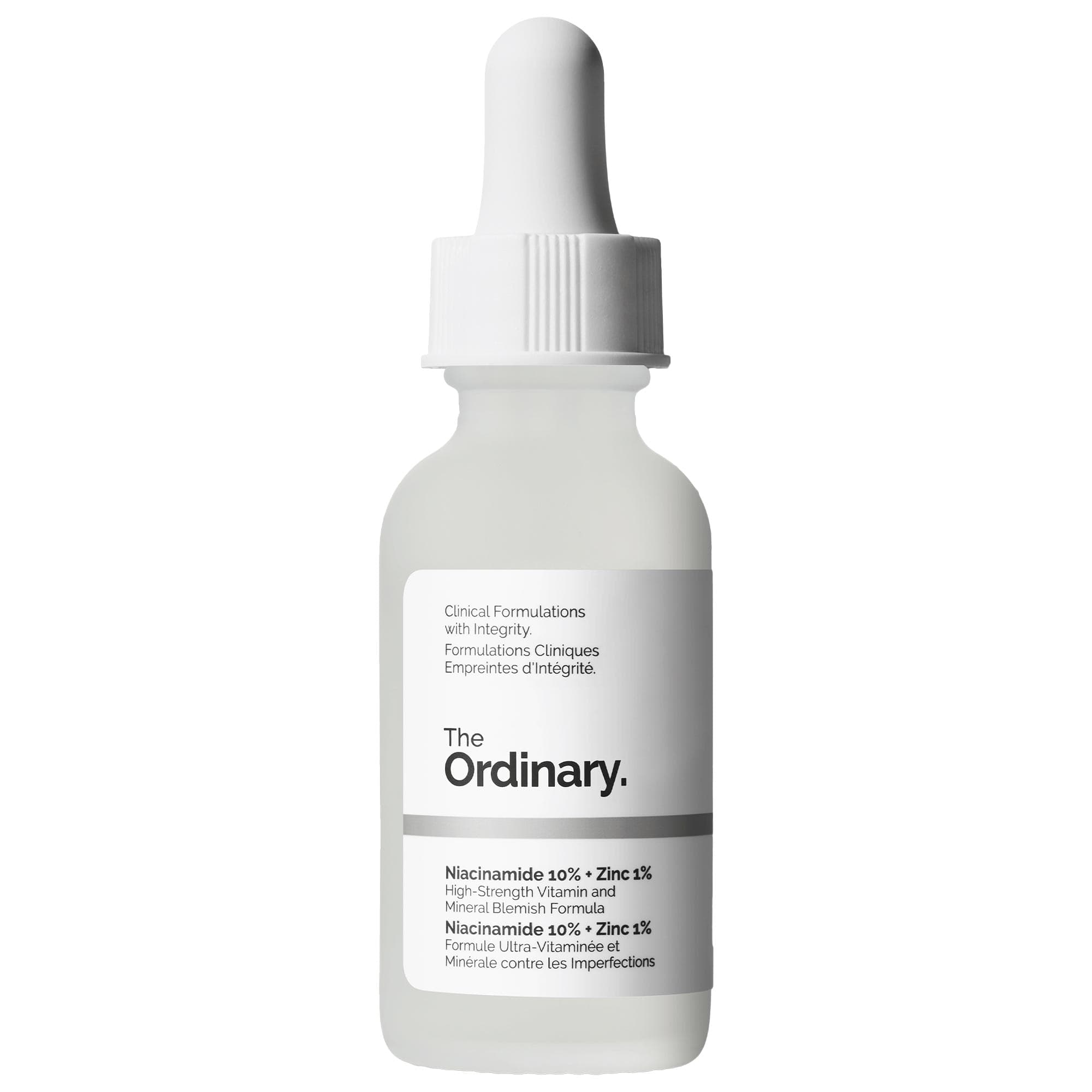
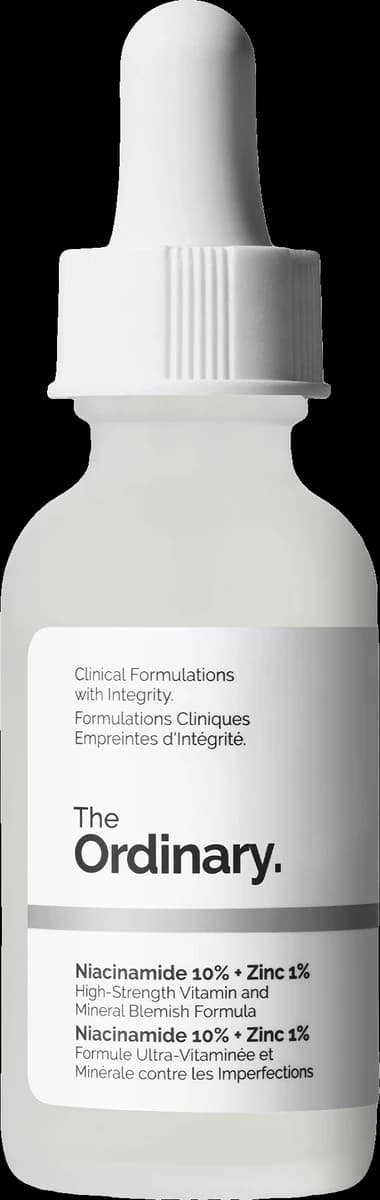
- The Ordinary Niacinamide 10% + Zinc 1%, 30 ml (1 fl oz) pictured; also sold in 60 ml (2 fl oz)
- Market
- United States
- Ingredient list
- 11 ingredients, read on The Ordinary's US website on October 7, 2026; the same list on Sephora and Ulta
- Barcode
- 769915190311 for the 30 ml, as Ulta and Amazon list it
- On the bottle
- “High-Strength Vitamin and Mineral Blemish Formula”, in English and French
- pH
- 5.00 to 6.50, the brand says (5.50 to 6.50 until late 2020)
- Directions
- “Apply a few drops to the face in the morning and evening”
- List history
- 10 ingredients until November 2017; dimethyl isosorbide joined by December 2017, and the same 11 since
- Made by
- DECIEM of Toronto, wholly owned by Estée Lauder since May 2024
Sources: The Ordinary US, its page as archived in November 2017, December 2017, November 2020 and December 2020, Sephora, Ulta, Amazon and Estée Lauder. The brand itself says the list on its site “may vary from the box”; check your pack. The brand also says DECIEM is Leaping Bunny certified; we did not find it in the Leaping Bunny directory, so the box below says no.
Label facts for The Ordinary Niacinamide 10% + Zinc 1%
- Niacinamide
- Niacinamide, 2nd of 11 ingredients
- Strength
- 10% niacinamide, 1% zinc PCA
- Also active
- Zinc
- Added fragrance
- None listed
- Drying alcohol
- None listed
- Supporting
- Zinc
- Cruelty-free certified
- No
Read from The Ordinary's US website on October 7, 2026. Labels list ingredients by amount down to 1%, then in any order, so a position is not a percentage. Formulas change; check your box. Cruelty-free certification: the Leaping Bunny and Cruelty Free International directories on October 6, 2026.
The Ordinary Niacinamide ingredients: the full list, mapped
The full list, in the brand’s order: Aqua (Water), Niacinamide, Pentylene Glycol, Zinc PCA, Dimethyl Isosorbide, Tamarindus Indica Seed Gum, Xanthan Gum, Isoceteth-20, Ethoxydiglycol, Phenoxyethanol, Chlorphenesin.
Two numbers in the name, and the list backs both up: niacinamide is 2nd of 11, after water, and zinc PCA is 4th. Below, each ingredient in the order it is printed, colored by what it does. New to reading a list? Start with our guide to reading an ingredients list.
- The stated 10%
- The stated 1%
- Solvents and a solubilizer
- Two gums that thicken it
- Preservatives
- Base: texture, pH and stability
Listed before the zinc PCA
- 1Water
- 2Niacinamide, The stated 10%
- 3Pentylene Glycol, Solvents and a solubilizer
The 1% zinc PCA and everything after it: about 1% or less each
- 4Zinc PCA, The stated 1%
- 5Dimethyl Isosorbide, Solvents and a solubilizer
- 6Tamarindus Indica Seed Gum, Two gums that thicken it
- 7Xanthan Gum, Two gums that thicken it
- 8Isoceteth-20, Solvents and a solubilizer
- 9Ethoxydiglycol, Solvents and a solubilizer
- 10Phenoxyethanol, Preservatives
- 11Chlorphenesin, Preservatives
Two gums, and why it can pill
Tamarind seed gum, 6th, and xanthan gum, 7th, give the water its slightly slippery body. A L’Oréal patent on pilling says it is often tied to high amounts of thickeners (US 2023/0046148); the label cannot show whether these two are high. In a Clarins-funded study of 528 women, 41% had pilling at some point, most of it after sunscreen, and rubbing in circles or lines caused the most (Lua, 2024). The brand puts pilling down to using too much or layering in the wrong order: 2 to 3 drops cover the face and neck, it says (The Ordinary).
Solvents, not drying alcohol
Pentylene glycol, 3rd, dimethyl isosorbide, 5th, and ethoxydiglycol, 9th, dissolve and carry the rest, and isoceteth-20, 8th, helps keep them mixed. None is the drying alcohol a US label means by “alcohol”, which is ethanol (FDA), and the list has none. Ethoxydiglycol is diethylene glycol monoethyl ether, a solvent widely used to help other ingredients into the skin (Hashemzadeh and Jouyban, 2022). The EU allows it up to 2.6% in leave-on products and not in eye products (CosIng); here it comes after the 1% zinc PCA, so it is at about 1% or less.
What “Zinc 1%” means: about 0.2% zinc
The 1% is zinc PCA, as the brand’s own graphics and its Amazon listing say, not 1% zinc. Zinc PCA is zinc bound to PCA, a moisturizing factor found in skin. Its formula is C10H12N2O6Zn and it weighs 321.6 grams per mole (PubChem), of which zinc is 65.4, about a fifth. So 1% zinc PCA puts about 0.2% zinc in the bottle. The EU caps zinc salts like this one at 1% counted as zinc (CosIng); this serum is at about a fifth of that.
The brand says zinc PCA balances excess oil and helps deliver the niacinamide into the skin (The Ordinary). We found no published test of either claim, and no human trial of zinc PCA alone on oil or acne. Plain zinc sulfate on the skin did no better than placebo for acne over 12 weeks and irritated more (Cochran, 1985). Zinc on the skin has done better as zinc acetate, alone or mixed with the antibiotic erythromycin (Gupta, 2014). The one trial we found of a cream with niacinamide, zinc PCA and antibacterial agents, used with adapalene, helped only at week 2 and only for blackheads and whiteheads; an Indonesian drug company, P.T. Transfarma Medica Indah, funded it (Sitohang, 2020).
Has The Ordinary Niacinamide changed? Once on the brand’s page, in 2017
We opened the brand’s page as archived from February 2017 to October 2026. The list changed once:
- Dimethyl isosorbide joined in late 2017. The page listed 10 ingredients on November 16, 2017 (archived page) and today’s 11 on December 2, 2017 (archived page), with dimethyl isosorbide, a solvent, added 5th. The same 11, in the same order, are in every copy we opened since.
- Before that, carrageenan. Lab Muffin, a chemist’s blog, wrote in April 2017 that an older version “contained carrageenan and hydrogenated castor oil”, which some people blamed for trouble layering it and for clogged pores (Lab Muffin). We found no archived brand page from 2016 to check it against.
- The pH moved. “5.50-6.50” until November 2020, “5.00-6.50” from December 2020 (November, December), the same list both times.
- The acne note left in 2024. From 2017 the page carried a note that niacinamide and zinc PCA are not a treatment for acne, and in 2017 it pointed people with persistent acne to benzoyl peroxide or retinoic acid (February 2017). The note was on the page on November 10, 2024 and gone by November 30 (before, after).
- New names, same bottle. The bottle still says “High-Strength Vitamin and Mineral Blemish Formula”. The website has called it “a universal serum for blemish-prone skin” since 2022 (archived page) and, in its page title since spring 2026, an “Oil Control Serum” (The Ordinary); Amazon calls it a “Smoothing Serum” (Amazon).
Under all that, the list has held for almost nine years. The brand’s page warns that its list “may vary from the box of the product depending on time and region of purchase” (The Ordinary). We found no photo of the printed list on a US box to compare, so check yours against the list above.
What The Ordinary claims, and what backs it
The brand’s page says the serum reduces excess oil in 3 days, improves smoothness and hydration within 7 days and reduces pore visibility in 4 weeks, “based on a clinical study of 35 subjects applying the product twice daily for 8 weeks” (The Ordinary). Three things about that:
- Two different head counts. The before-and-after photo on the same page, and on Amazon, says “33 panellists” (The Ordinary, Amazon). It may be the same test with two dropouts, or two tests; the brand does not say.
- Footnotes that lead nowhere. A newer graphic on the brand’s page claims smoother texture in 1 week, “with best results after 6 weeks”, and that it “Improves Skin Radiance by 46%”, with footnotes 2 to 4 that we could not find defined anywhere on the page.
- No published report. We found no report of this test in PubMed, Europe PMC or ClinicalTrials.gov, under DECIEM or Estée Lauder. Its “non-comedogenic” claim, in the FAQ on its product page since June 2025, is footnoted to the same 35-subject study.
A brand’s own use test is not nothing, but it cannot be checked: we do not know who ran it, what was measured, or how the results compared with doing nothing.
Does The Ordinary Niacinamide work? What the studies show
We found no published trial of this serum. What exists is evidence for niacinamide, almost all of it at lower strengths:
- Oil. A 2% niacinamide moisturizer lowered sebum production over 4 weeks in a Japanese study, and lowered the oil on the skin over 6 weeks in a smaller US one (Draelos, 2006).
- Dark spots and aging, from Procter & Gamble. Its scientists found 5% niacinamide faded dark spots within 4 weeks (Hakozaki, 2002), and over 12 weeks improved fine lines, spots, red blotchiness and sallowness in 50 women (Bissett, 2004). In a Mexican trial, 4% niacinamide gave good to excellent improvement in melasma in 44% of patients, against 55% with 4% hydroquinone, with fewer side effects (Navarrete-Solís, 2011).
- Acne. 4% niacinamide gel did about as well as 1% clindamycin gel over 8 weeks: 82% improved against 68%, a difference that could be chance, in a trial partly supported by Genderm (Shalita, 1995; Cochrane), and similar results came from Iran (Khodaeiani, 2013). Even so, the AAD’s 2024 acne guideline found the evidence “insufficient to develop a recommendation” on topical niacinamide or zinc (Reynolds, 2024).
- What dermatologists agree on. In a 2025 survey of 62 cosmetic dermatologists, niacinamide reached agreement for redness and dark spots, not for acne, large pores or oily skin (Alvarez, 2025). The AAD lists niacinamide among mask ingredients “to help reduce shiny skin and acne” (AAD).
- At 10%, no clean test. Every 10% niacinamide trial we found added other actives, such as a vitamin C and hyaluronic acid against hydroquinone for melasma (Barbosa, 2024), or compared two forms of niacinamide with no placebo: a 10% film that sticks to the skin against a niacinamide gel, for acne (Nasr, 2018). The acne trials of niacinamide gel that a Cochrane review found used 4% or 5% (Cochrane).
Bottom line: niacinamide has fair evidence for oil, dark spots and red blotchiness at 2% to 5%. We found no trial of this serum, no trial of zinc PCA alone and no trial showing 10% does better than 5%.
Is 10% niacinamide too strong?
It is double the strength of the trials we found that tested niacinamide alone against a placebo or another treatment, and for some skin it seems to be too much. The evidence:
- Short tests found it mild. The US Cosmetic Ingredient Review panel found no unacceptable stinging from niacinamide in water at up to 10%, in one Unilever test, and no irritation up to 5% in use tests (CIR, 2005). It reviewed products with at most 3%, and its database lists no later review of niacinamide.
- In one 10% trial, itching was common. In a cream with 10% niacinamide, a vitamin C and hyaluronic acid used twice a day, 29% had mild itching for a few minutes after applying at day 14, and 13% had mild acne by day 60; all of it went away on its own (Barbosa, 2024).
- The brand changed its line. From at least October 2024 its blog called the 5% emulsion “milder, especially for those with sensitive skin” (archived blog). The May 2026 rewrite says “Our safety testing shows that 10% niacinamide is suitable for all skin types, including sensitive skin”, while suggesting 1 to 2 days a week to start (The Ordinary).
- Not the niacin flush. Niacinamide is not niacin, the vitamin whose flush is well known, and a 2021 review says it does not cause that flush (Boo, 2021). Some people on Reddit still report flushing after this serum; we found no study that explains it.
If your skin is reactive, start with a 5% serum, or use this one every other day and build up.
Can you use The Ordinary Niacinamide with vitamin C?
The brand says no: use them in “separate routines”, because combining them “may decrease effectiveness”, and its page lists both direct and indirect vitamin C under “Do not use with” (The Ordinary). Paula’s Choice says the opposite and puts 2% ascorbyl glucoside, a vitamin C, in its own niacinamide booster (Paula’s Choice). What the evidence shows:
- In water, in a lab, they react. Niacinamide and ascorbic acid form a yellow complex at once in water (Guttman and Brooke, 1963), and niacinamide turns into niacin when heated, studied at about 89 °C (Finholt and Higuchi, 1962).
- On skin, we found no test of the rule. We found no clinical study showing worse results when the two are used together. In 2020, DECIEM’s chief scientific officer called the rule “a conservative approach”: the reaction can be reversed in a beaker, the officer said, but on the skin the two “could antagonize each other”, and agreed that few biological studies exist (Lab Muffin interview).
So the rule rests on caution, but following it costs nothing: niacinamide in the morning, vitamin C at night, or the other way round. Our vitamin C serum guide has the picks.
The Ordinary vs Paula’s Choice 10% Niacinamide Booster
The two state the same 10%, listed 2nd on both, and the lists part ways from there:
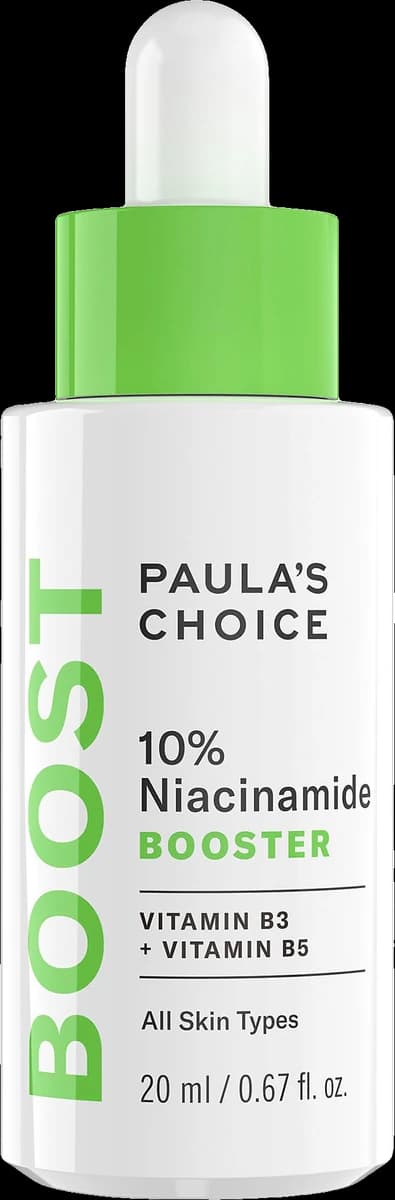
| Label fact | The Ordinary Niacinamide 10% + Zinc 1% | Paula's Choice 10% Niacinamide Booster |
|---|---|---|
| Stated strength | 10% niacinamide, 1% zinc PCA | 10% niacinamide |
| Ingredients | 11 | 27 |
| Niacinamide on the list | 2nd of 11 | 2nd of 27 |
| Zinc | Zinc PCA, 4th of 11 | None listed |
| Vitamin C | None listed | Ascorbyl glucoside, 4th of 27; the brand says 2% |
| Ingredients the brand calls soothing | None named | Allantoin, boerhavia diffusa root, licorice extract |
| What the brand says about vitamin C | Keep it away from vitamin C: “separate routines” | Use them together: it contains a vitamin C |
| How the brand says to use it | Apply “a few drops to the face in the morning and evening” | A few drops alone, or mixed into “any non-SPF product” |
| Added fragrance | None listed | None listed |
| Where to buy |
A place on one list cannot be compared with a place on the other as an amount. Both lists are read from the brands’ US sites (The Ordinary, Paula’s Choice). We found no trial that compares them.
Which should you buy? On a budget, or for oily skin, The Ordinary. For dark spots or mixing into a moisturizer, Paula’s Choice, the best overall pick in our guide.
The Ordinary vs Naturium Niacinamide Serum 12% Plus Zinc 2%
Naturium sells the stronger version of the same idea: more niacinamide, twice the zinc PCA.
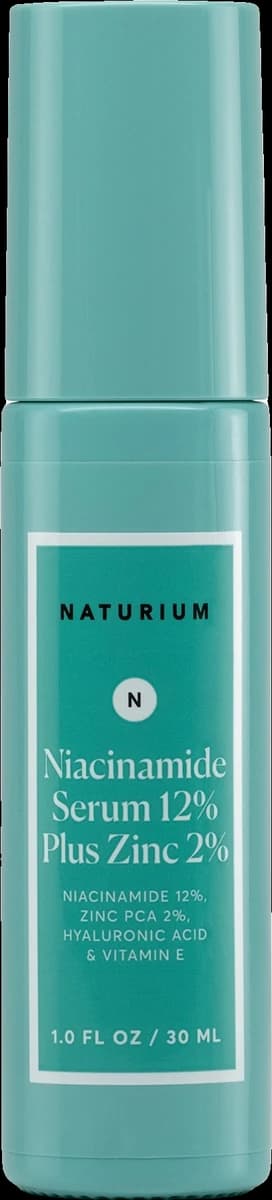
| Label fact | The Ordinary Niacinamide 10% + Zinc 1% | Naturium Niacinamide Serum 12% Plus Zinc 2% |
|---|---|---|
| Stated strength | 10% niacinamide, 1% zinc PCA | 12% niacinamide, 2% zinc PCA |
| About how much zinc that is | 0.2% | 0.4% |
| Ingredients | 11 | 16 |
| Zinc PCA on the list | 4th of 11 | 5th of 16 |
| Glycerin, hyaluronic acid, dimethicone | None listed | All three listed |
| How the brand says to use it | Apply “a few drops to the face in the morning and evening” | Shake well; face, neck and chest, “morning and night”, then moisturizer |
| Added fragrance | None listed | None listed |
| Where to buy |
Naturium states its strengths as 12% niacinamide and 2% zinc PCA (Naturium), which works out to about 0.4% zinc. We found no trial testing either strength against a lower one, and no trial of either serum.
Which should you buy? If you want the simplest, cheapest list, The Ordinary. If you want glycerin and hyaluronic acid in the same step, Naturium, our pick for oily skin. If 10% already stings, a stronger serum is unlikely to sting less.
What the label can’t tell you
- How much of the rest there is. The brand states only the 10% and the 1%. The solvents, gums and preservatives after the zinc PCA are at about 1% or less each, but not exactly how much.
- What the brand’s test found. Who ran it, on whom, against what, and whether it was 35 people or 33.
- Whether your box matches the site. The brand says the two can differ, and we found no photo of a US box’s printed list.
- How it will feel on your skin. We did not test it on skin. What people who used it say is below.
The Ordinary Niacinamide reviews on Reddit
We read all 486 archived comments in 8 Reddit threads about this serum, from 2016 to 2026, and scored the 123 commenters who said they had used it, once each. Some threads were picked for titles that praised or blamed it, so the counts show what people raise, not how often it happens. Opinions are not evidence, but they show what to expect:
- More yes than no, but plenty of no. Of 113 who gave a verdict, 63 said it worked, 10 were mixed and 40 said it did not or stopped. 24 of the yes votes named no result or only said it caused no problems. One r/SkincareAddiction user wrote “now i can go a full 8 hours without blotting!” (2017 thread); another, in r/IndianSkincareAddicts, “I used this for 2 months. Legit felt like waste of money lol” (2022 thread).
- Breakouts top the complaints. 24 commenters said it broke them out, 15 of them among the no votes. One wrote that it “broke me out bad which took over 3 months to recover from. Definitely not a purge.” (2022 thread). 2 said it purged, then cleared.
- Irritation is next. 19 described redness, burning, itching, tingling or flushing: “I’ll always have that tingly itchy sensation for the first few minutes” (2026 thread). 4 said a 2% to 5% product suited them better, and 10 coped by mixing it into moisturizer, using fewer drops or using it less often, 6 of them happily.
- The good reports. 14 said they had fewer or faster-healing pimples, 11 smaller-looking pores, 8 less oil and 8 faded marks: “It’s faded my PIE and made my pores look smaller” (2018 thread).
- Pilling and dryness. 8 mentioned pilling, one under makeup: “It pills and looks like my skin is flaking off, but it’s the serum” (2016 thread). 9 said it left skin dry or tight.
- Time to results. Reports ranged from overnight to “after like 2-3 months” (2026 thread), and 12 saw no effect at all.
How to use The Ordinary Niacinamide
- Patch test first, as the label advises: a little on the upper forearm for a day.
- A few drops, morning and evening, after cleansing. The brand says 2 to 3 drops cover the face and neck (The Ordinary).
- Sensitive skin: start 1 to 2 days a week and build up, as the brand suggests.
- Before creams and oils. It is water-based, so it goes on before heavier moisturizers; in the morning, sunscreen last. Our skincare order guide has the full routine.
- Spread it lightly and let it dry before the next layer, to cut pilling.
- Vitamin C in the other routine, if you follow the brand.
- Not on broken skin or around the eyes. If it irritates, rinse it off and stop, as the label says.
Alternatives worth a look
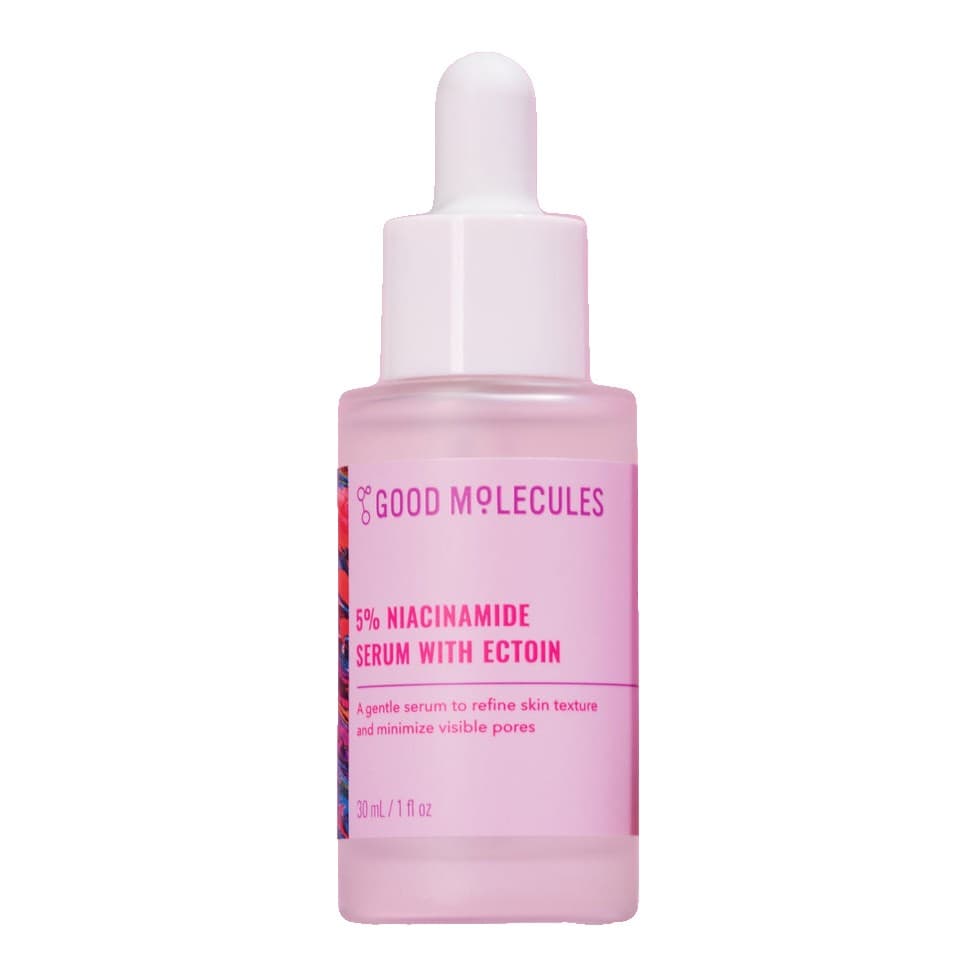
Good Molecules 5% Niacinamide Serum with Ectoin
For sensitive skin: half the niacinamide, 14 ingredients with ectoin. Our pick for sensitive skin.
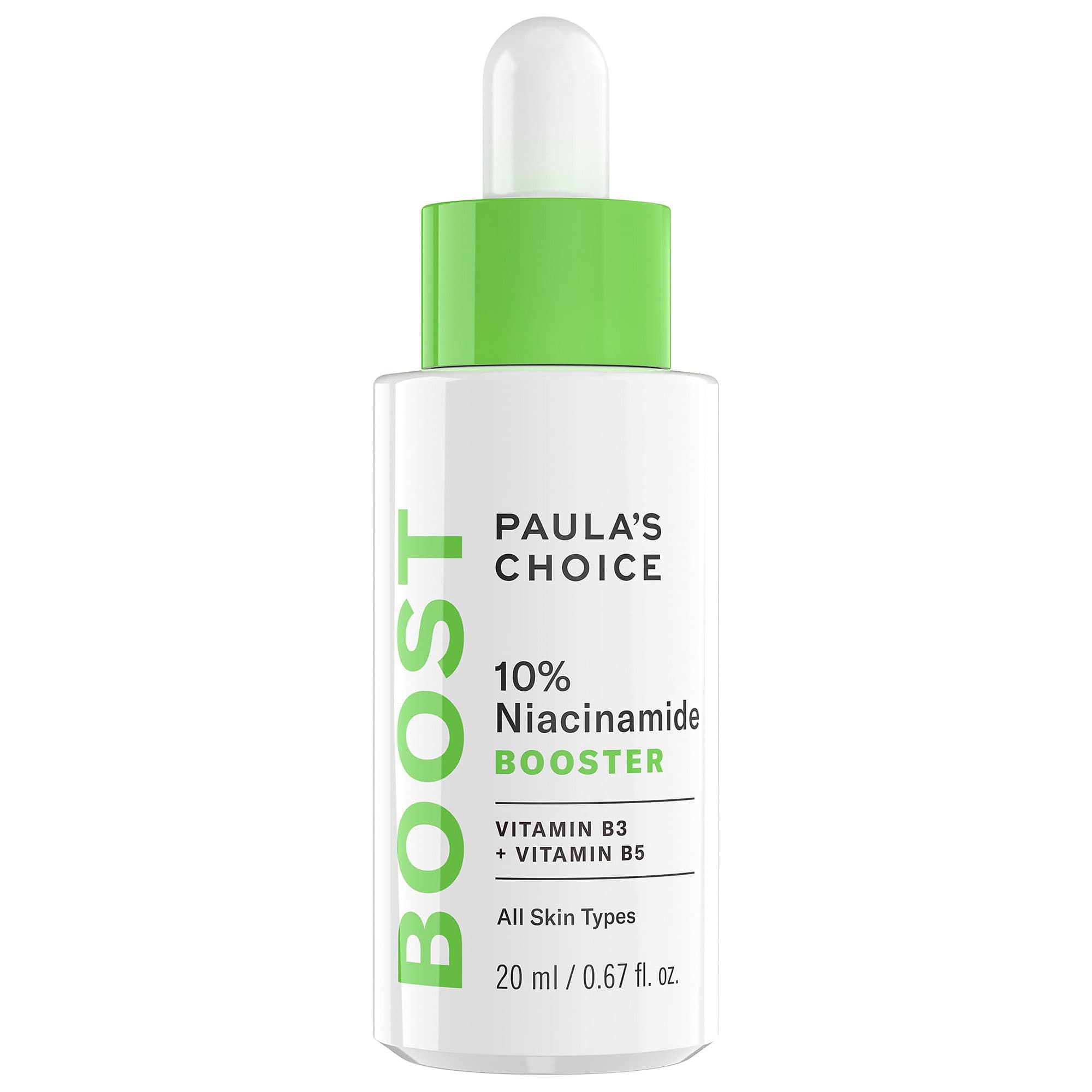
Paula's Choice 10% Niacinamide Booster
The same 10%, with a vitamin C and extras the brand calls soothing, and made to mix into moisturizer. See the comparison above.
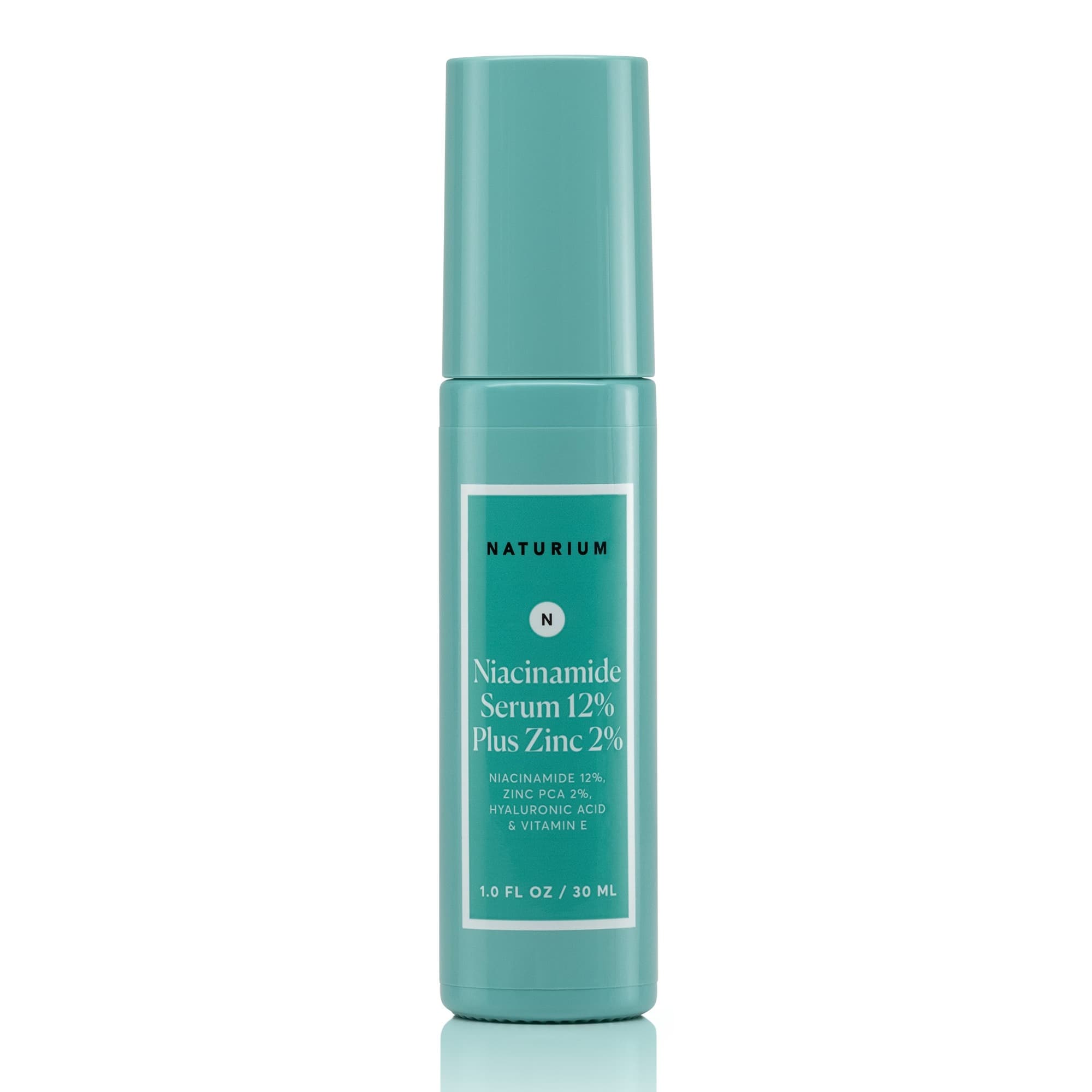
Naturium Niacinamide Serum 12% Plus Zinc 2%
Stronger: 12% niacinamide and 2% zinc PCA, with glycerin and hyaluronic acid. See the comparison above.
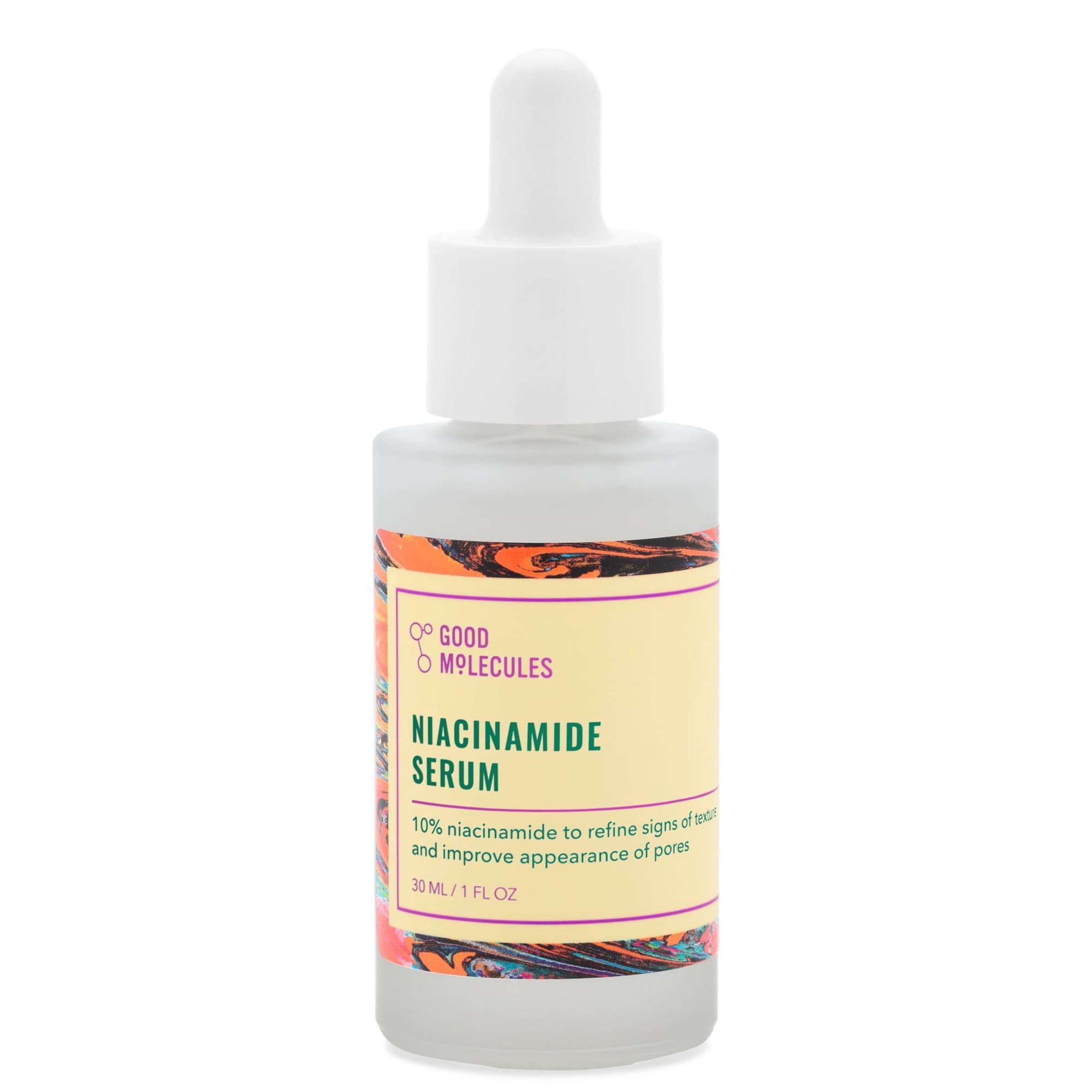
Good Molecules Niacinamide Serum
Another 10%, without zinc: 10 ingredients, with glycerin and betaine.
How we reviewed it, and why you can trust it
We read the US ingredient list on The Ordinary’s website, the brand’s page as archived from 2017 to 2026, its blog, FAQ and claims images, the Sephora, Ulta and Amazon listings, Estée Lauder’s releases, and the US lists of Paula’s Choice’s and Naturium’s serums. We read the niacinamide and zinc trials we found in PubMed, Cochrane and ClinicalTrials.gov, the AAD guideline, the CIR and EU rules, the reviews that rank on Google’s first page, and 486 Reddit comments through an archive.
- Every ingredient position, count and flag from today’s US lists is generated from them, not typed by hand.
- Every health claim links to its source, and studies paid for by a company say so.
- The Ordinary did not pay for this review or send us a product, and commission never decides what we say.
- We did not test it on skin, so there is no star rating.
Our full method explains what we check and why. For more options, read our best niacinamide serums.
Questions people ask
Is The Ordinary Niacinamide 10% + Zinc 1% good?
For oily or combination skin on a budget, yes, on paper. It lists 11 ingredients, niacinamide 2nd and zinc PCA 4th, with no fragrance and no drying alcohol, and it is the best budget pick in our niacinamide guide. Two cautions: the trials we found of niacinamide alone against a placebo or another treatment used 2% to 5%, not 10%, and we found no published report of the brand’s own test. We did not test it on skin.
What does The Ordinary Niacinamide do, and what are its benefits?
The brand says it reduces excess oil, smooths texture, reduces the look of pores and boosts radiance (The Ordinary). The evidence behind niacinamide itself is for oil, dark spots and red blotchiness, mostly at 2% to 5%. In a 2025 survey, cosmetic dermatologists agreed on niacinamide for redness and dark spots, not for acne, pores or oily skin (Alvarez, 2025). The zinc PCA is about 0.2% zinc, and we found no trial of it alone.
Does The Ordinary Niacinamide actually work?
Niacinamide has trial evidence, but we found no published trial of this serum. Trials at 2% to 5% found less oil, less red blotchiness, fewer dark spots, and acne results similar to a clindamycin gel. The brand’s claims rest on its own 8-week test, which we found no published report of. On Reddit, 63 of the 113 commenters who gave a verdict said it worked for them and 40 said it did not or stopped. The evidence section has the details.
Is The Ordinary Niacinamide good for acne?
It is not an acne treatment, and the brand said so on its own page until November 2024 (archived page). The AAD’s 2024 acne guideline says the evidence is insufficient to make a recommendation on topical niacinamide or zinc (Reynolds, 2024). Small trials found 4% niacinamide gel about as good as 1% clindamycin gel (Shalita, 1995). For acne, benzoyl peroxide, a retinoid or salicylic acid have stronger support; see our acne face wash guide.
How long does The Ordinary Niacinamide take to work?
Expect weeks, not days. The brand claims less oil in 3 days and smaller-looking pores in 4 weeks, from its own test, which we found no published report of (The Ordinary). The niacinamide trials ran for 4 to 12 weeks; most ended at 8 (Searle, 2026). On Reddit, people we read reported results anywhere from overnight to 2 or 3 months, and some saw none after 6 weeks, 2 months or a whole bottle.
What do The Ordinary Niacinamide before and after photos show?
The brand’s own before-and-after photo comes from its own test, footnoted to “33 panellists” using it twice a day for 8 weeks (Amazon). We found no published report of that test, and we did not test it on skin, so we have no photos of our own. On Reddit, people we read reported results from overnight to 2 or 3 months, and 12 saw no effect at all. See the brand’s claims.
Can I use The Ordinary Niacinamide every day?
Yes; the label says morning and evening. If your skin is sensitive, the brand suggests starting 1 to 2 days a week and building up, and stopping if it irritates (The Ordinary). Use a few drops: the brand says 2 to 3 for the whole face and neck.
Should I use The Ordinary Niacinamide in the morning or at night?
Either, or both: the label says morning and evening. If you also use a vitamin C serum and want to follow the brand, put the niacinamide in one routine and the vitamin C in the other (The Ordinary). In the morning, it goes under your moisturizer and sunscreen.
Do you wash off The Ordinary Niacinamide?
No. It is a leave-on serum: the label says to apply a few drops to the face morning and evening, and to rinse it off only if it irritates (The Ordinary). Let it dry, then put your moisturizer on top.
What should you not mix with The Ordinary Niacinamide?
The brand says vitamin C, in its direct and indirect forms (The Ordinary). We found no clinical study showing that using the two together lowers results; the idea comes from lab chemistry in water (Guttman and Brooke, 1963). The brand says it pairs well with hyaluronic acid, retinoids and salicylic acid (The Ordinary). See our vitamin C section.
Can I use The Ordinary Niacinamide with vitamin C?
The Ordinary says no, use them in separate routines, because combining them “may decrease effectiveness” (The Ordinary). Paula’s Choice says yes and puts a vitamin C in its own niacinamide booster (Paula’s Choice). We found no study comparing the two used together with the two used apart. Following The Ordinary costs you nothing: niacinamide in the morning, vitamin C at night, or the other way round.
Can I use The Ordinary Hyaluronic Acid and Niacinamide together?
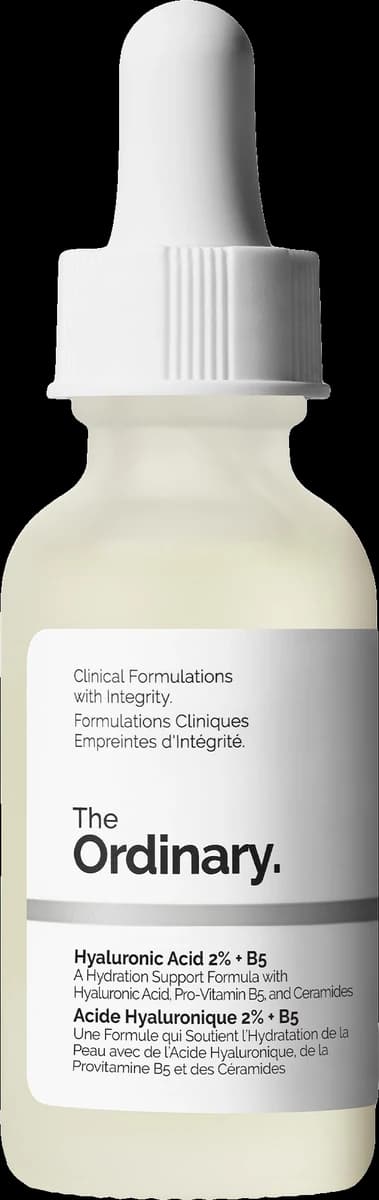
Yes. The brand says the two can be used in the same routine, and that water-based serums go on in the order of your skin concerns rather than hyaluronic acid first (The Ordinary). Both go before heavier creams and oils. The Ordinary’s Hyaluronic Acid 2% + B5 is the best overall pick in our hyaluronic acid guide.
Can I use The Ordinary Niacinamide with retinol or salicylic acid?
The brand says yes to both (The Ordinary). With a retinoid, add one new product at a time; if your skin stings or peels, use the niacinamide in the morning and the retinoid at night. Our guide to mixing ingredients covers the common pairs.
Why does The Ordinary Niacinamide pill?
Usually too much product or too much rubbing. The brand blames over-applying or layering in the wrong order and says 2 to 3 drops cover the face and neck (The Ordinary). Its list has two gum thickeners, and a L’Oréal patent says pilling is often tied to high amounts of thickeners (L’Oréal patent). In a Clarins-funded study, most pilling happened after sunscreen, and rubbing in circles or lines caused the most (Lua, 2024). Let it dry before the next layer.
What are the side effects of The Ordinary Niacinamide?
Breakouts, irritation and dryness were the complaints we read most on Reddit: 24 of 123 commenters said it broke them out, 19 described redness, burning, itching, tingling or flushing, and 9 said it left skin dry or tight. In a trial of a cream with 10% niacinamide, a vitamin C and hyaluronic acid, 29% had mild itching after applying at day 14 and 13% had mild acne by day 60 (Barbosa, 2024). If it irritates, rinse it off and stop, as the label says.
Why does The Ordinary Niacinamide burn, tingle or itch?
Some skin reacts to it: 19 of the 123 Reddit commenters we scored described redness, burning, itching, tingling or flushing, and we found no study of this serum that explains why. In the one 10% niacinamide trial we found with side-effect counts, 29% of users had mild itching for a few minutes after applying at day 14; that cream also had a vitamin C and hyaluronic acid in it (Barbosa, 2024). Niacinamide is not niacin, the vitamin that causes the well-known niacin flush (Boo, 2021). If it burns, rinse it off and stop, as the label says, and try a 5% serum instead.
Is The Ordinary Niacinamide good for sensitive skin?
Start lower if you can. The brand now says its safety testing shows 10% suits all skin types, including sensitive skin; until a May 2026 rewrite, its blog called its 5% emulsion “milder, especially for those with sensitive skin” (archived blog). Irritation was the second most common complaint in the Reddit threads we read. For sensitive skin, our niacinamide guide picks Good Molecules’ 5% serum.
Does The Ordinary Niacinamide cause purging or breakouts?
Some people break out, and we found no study showing it is purging. The brand itself says no research has investigated the concept of purging (The Ordinary), and we found none. Breakouts were the most common complaint we read on Reddit: 24 of 123 commenters. In a trial of a cream with 10% niacinamide, a vitamin C and hyaluronic acid, 13% had mild acne by day 60 (Barbosa, 2024). If you break out for more than a few weeks, stop.
Is 10% niacinamide too much? 10% vs 5%
It is double what the evidence rests on. The trials we found of niacinamide alone against a placebo or another treatment used 2% to 5%, and we found no trial comparing 10% with a lower strength; a 2026 review says that comparison is still needed (Searle, 2026). The brand says its testing shows 10% gets more niacinamide into the skin than 5%; we found no published report of that testing (The Ordinary). We found no proof that more is better.
What does the zinc in The Ordinary Niacinamide do?
The brand says it balances excess oil. The 1% is zinc PCA, zinc bound to PCA, a moisturizing factor found in skin; zinc is about a fifth of its weight, so the serum has about 0.2% zinc (PubChem). The EU lists zinc PCA as a humectant and skin conditioner (CosIng). We found no trial of zinc PCA alone on oil or acne, and plain zinc sulfate on the skin did no better than placebo for acne in a 1985 trial (Cochran, 1985).
Is The Ordinary Niacinamide good for oily or dry skin?
It is made with oily skin in mind: the brand’s page title says “Oil Control Serum”, though it also says it suits all skin types (The Ordinary). On dry skin it has nothing rich in it, so follow it with a moisturizer; 9 commenters we read said it left their skin dry or tight.
Is The Ordinary Niacinamide good for dark spots and acne marks?
It may help, slowly. Niacinamide faded dark spots in a Procter & Gamble 5% study (Hakozaki, 2002), and in a trial against 4% hydroquinone, 4% niacinamide gave good to excellent improvement in melasma in 44% of patients, against 55% (Navarrete-Solís, 2011). Both trials ran for weeks, so give it at least 8, with sunscreen every day.
Is The Ordinary Niacinamide safe during pregnancy?
It has not been tested in pregnancy: the brand says each ingredient is considered safe on the skin, but its products have not been tested on people who are pregnant or breastfeeding (The Ordinary). So ask your ob-gyn first. ACOG lists the over-the-counter acne ingredients that can be used in pregnancy, niacinamide is not among them, and it says to ask your ob-gyn about any ingredient that is not (ACOG). We found no pregnancy guidance on topical niacinamide from the AAD.
Can I use The Ordinary Niacinamide on my eyelids, around my eyes or on a popped pimple?
No. The label says to apply it to the face and to use it only on unbroken skin (The Ordinary). It also contains ethoxydiglycol, which EU rules do not allow in eye products (CosIng). The label gives no spot-treatment use either.
Does The Ordinary Niacinamide contain alcohol?
No ethanol, and the brand calls it alcohol-free (The Ordinary). Pentylene glycol and ethoxydiglycol are solvents, not the drying alcohol a US label means by “alcohol” (FDA).
Is The Ordinary Niacinamide fungal acne safe?
We found no evidence either way. A short list is not a test, and we found no study of this serum and Malassezia, the yeast behind fungal acne. If you have fungal acne, ask a dermatologist.
Does The Ordinary Niacinamide expire?
Yes. The brand’s FAQ says to check the period-after-opening symbol on the pack (The Ordinary), and from 2022 to 2024 its product page said it was good for “12 months after opening” (archived page). We could not read the symbol on a US box. Replace it if it changes color, smell or texture.
The Ordinary vs Paula’s Choice niacinamide: which is better?
On a budget or for oily skin, The Ordinary; for dark spots or mixing into a moisturizer, Paula’s Choice, the best overall pick in our guide. Both state 10% niacinamide, listed 2nd. The Ordinary’s list is 11 ingredients with zinc PCA; Paula’s Choice’s is 27, with a vitamin C, licorice and allantoin, and it costs more. We found no trial that compares them. See the comparison.
The Ordinary vs Naturium niacinamide: which is better?
For the simplest, cheapest list, The Ordinary; for glycerin and hyaluronic acid in the same step, Naturium. Naturium is also stronger on paper: 12% niacinamide and 2% zinc PCA, about 0.4% zinc, with glycerin and hyaluronic acid. The Ordinary is 10% and 1%, on a shorter list. We found no trial of either. Naturium is our pick for oily skin; see the comparison.
Is the 60 ml bottle the same formula?
Yes. The brand sells the 30 ml and the 60 ml from one product page with one ingredient list (The Ordinary). Ulta also sells a 4 oz bottle.
Sources
- The Ordinary: Niacinamide 10% + Zinc 1% (US product page)
- The Ordinary: Product Spotlight: Niacinamide 10% + Zinc 1% (2026)
- The Ordinary: Product Spotlight: Niacinamide 10% + Zinc 1%, as archived on October 4, 2024
- The Ordinary: Fact vs. Fiction: Using Hyaluronic Acid and Niacinamide Together (2026)
- The Ordinary: Frequently asked questions
- DECIEM: Niacinamide 10% + Zinc 1%, as archived on February 25, 2017
- DECIEM: Niacinamide 10% + Zinc 1%, as archived on November 16, 2017 (10 ingredients)
- DECIEM: Niacinamide 10% + Zinc 1%, as archived on December 2, 2017 (11 ingredients, with dimethyl isosorbide)
- The Ordinary: Niacinamide 10% + Zinc 1%, as archived on November 28, 2020 (pH 5.50-6.50)
- The Ordinary: Niacinamide 10% + Zinc 1%, as archived on December 30, 2020 (pH 5.00-6.50)
- The Ordinary: Niacinamide 10% + Zinc 1%, as archived on November 10, 2024
- The Ordinary: Niacinamide 10% + Zinc 1%, as archived on November 30, 2024
- Amazon: The Ordinary Niacinamide 10% + Zinc 1%, Smoothing Serum for Blemish-Prone Skin, 1 fl oz
- Sephora: The Ordinary Niacinamide 10% + Zinc 1% Serum for Oily Skin
- Ulta: The Ordinary Niacinamide 10% + Zinc 1% Serum for Oily Skin
- The Estée Lauder Companies: The Estée Lauder Companies Completes Acquisition of DECIEM (2024)
- Lab Muffin Beauty Science: The Ordinary Skincare Review Pt 2 (2017)
- Lab Muffin Beauty Science: Interview with DECIEM/The Ordinary's chief scientific officer and Dr Davin Lim (2020)
- Paula's Choice: 10% Niacinamide Booster
- Naturium: Niacinamide Serum 12% Plus Zinc 2%
- 21 CFR 701.3: order of ingredients on cosmetic labels (the 1% rule)
- FDA: "Alcohol free" cosmetic labeling claims
- PubChem: Zinc pidolate (zinc PCA), CID 11602214
- European Commission CosIng: Zinc PCA
- European Commission CosIng: Diethylene glycol monoethyl ether (ethoxydiglycol), Annex III/297
- Hashemzadeh and Jouyban: Review of pharmaceutical applications of diethylene glycol monoethyl ether, Journal of Pharmacy and Pharmaceutical Sciences (2022)
- Reynolds et al.: Guidelines of care for the management of acne vulgaris, Journal of the American Academy of Dermatology (2024)
- Alvarez et al.: Skincare ingredients recommended by cosmetic dermatologists: a Delphi consensus study, Journal of the American Academy of Dermatology (2025)
- Liu et al.: Topical azelaic acid, salicylic acid, nicotinamide, sulphur, zinc and fruit acid (alpha-hydroxy acid) for acne, Cochrane Database of Systematic Reviews (2020)
- Searle, Al-Niaimi and Ali: Cosmeceuticals in acne vulgaris: from mechanism of action to clinical application, Skin Health and Disease (2026)
- Bissett et al. (Procter & Gamble): Topical niacinamide reduces yellowing, wrinkling, red blotchiness, and hyperpigmented spots in aging facial skin, International Journal of Cosmetic Science (2004)
- Hakozaki et al. (Procter & Gamble): The effect of niacinamide on reducing cutaneous pigmentation and suppression of melanosome transfer, British Journal of Dermatology (2002)
- Draelos et al.: The effect of 2% niacinamide on facial sebum production, Journal of Cosmetic and Laser Therapy (2006)
- Navarrete-Solís et al.: A double-blind, randomized clinical trial of niacinamide 4% versus hydroquinone 4% in the treatment of melasma, Dermatology Research and Practice (2011)
- Shalita et al.: Topical nicotinamide compared with clindamycin gel in the treatment of inflammatory acne vulgaris, International Journal of Dermatology (1995)
- Khodaeiani et al.: Topical 4% nicotinamide vs. 1% clindamycin in moderate inflammatory acne vulgaris, International Journal of Dermatology (2013)
- Barbosa et al.: Efficacy and safety of nicotinamide 10%, associated with magnesium ascorbyl phosphate 5% and hyaluronic acid 5%, compared to hydroquinone 4% in women with facial melasma, Clinical, Cosmetic and Investigational Dermatology (2024)
- Nasr et al.: Novel nicotinamide skin-adhesive hot melt extrudates for treatment of acne, Expert Opinion on Drug Delivery (2018)
- Sitohang et al.: Efficacy and tolerability of topical nicotinamide plus antibacterial adhesive agents and zinc-pyrrolidone carboxylic acid versus placebo as an adjuvant treatment for moderate acne vulgaris in Indonesia, Journal of Clinical and Aesthetic Dermatology (2020)
- Cochran, Tucker and Flannigan: Topical zinc therapy for acne vulgaris, International Journal of Dermatology (1985)
- Gupta et al.: Zinc therapy in dermatology: a review, Dermatology Research and Practice (2014)
- Cosmetic Ingredient Review: Final report of the safety assessment of niacinamide and niacin, International Journal of Toxicology (2005)
- American College of Obstetricians and Gynecologists: Skin conditions during pregnancy
- The Ordinary: Niacinamide 10% + Zinc 1%, as archived on August 27, 2022
- Boo: Mechanistic basis and clinical evidence for the applications of nicotinamide (niacinamide) to control skin aging and pigmentation, Antioxidants (2021)
- Guttman and Brooke: Solution phase interaction of nicotinamide with ascorbic acid, Journal of Pharmaceutical Sciences (1963)
- Finholt and Higuchi: Rate studies on the hydrolysis of niacinamide, Journal of Pharmaceutical Sciences (1962)
- Lua et al. (Clarins): Understanding the causes of skincare product pilling, Skin Research and Technology (2024)
- L'Oréal: US 2023/0046148 A1, Cosmetic composition that resists pilling (2023)
- American Academy of Dermatology: Do facial masks work, and should I add one to my skin care routine?
- Reddit, r/45PlusSkincare: "Honest Review After 6 Weeks of Using The Ordinary Niacinamide 10% + Zinc" (2025)
- Reddit, r/SkincareAddiction: "[Product Question] What are your thoughts on The Ordinary's Niacinamide Serum?" (2024)
- Reddit, r/IndianSkincareAddicts: "The Ordinary Niacinamide Serum is worth the hype" (2022)
- Reddit, r/TheOrdinarySkincare: "Niacinamide" (2026)
- Reddit, r/AsianBeauty: "[Review] ~6 weeks of The Ordinary Niacinamide 10% + Zinc 1%" (2016)
- Reddit, r/SkincareAddiction: "The Ordinary's Niacinamide 10% + Zinc 1% wrecked my skin! [Misc]" (2018)
- Reddit, r/TheOrdinarySkincare: "Is the Niacinamide 10% + Zinc 1% serum bad for your skin?" (2022)
- Reddit, r/SkincareAddiction: "[Review] the ordinary's Niacinamide 10% + Zinc 1% is a mattifying angel sent down from heaven" (2017)
Written by Avina Picks. Not clinically reviewed, and not a treatment plan: ask a dermatologist about a skin condition, a prescription, pregnancy or breastfeeding.
A serum works when it is part of your routine
Avina keeps your morning and evening routines with your real products, and records the days you did them, so you can see what you actually used while you judge a new serum.

More from Avina Picks
- Niacinamide
The Best Niacinamide Serums
Paula's Choice 10% Niacinamide Booster is our pick, and The Ordinary's Niacinamide 10% + Zinc 1% the budget one. More is not better: the best-known trials used 2% to 5%.Updated - Vitamin C
The Best Vitamin C Serums
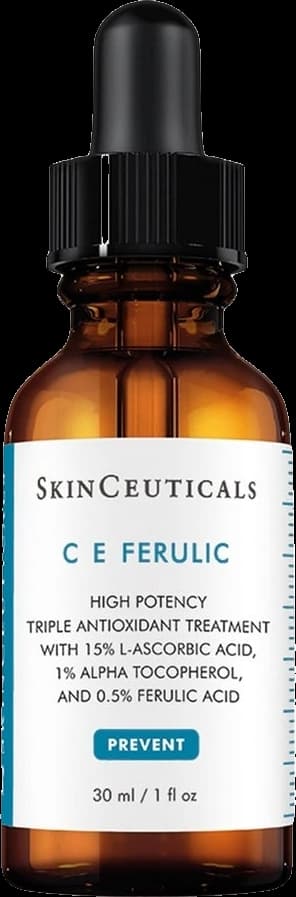
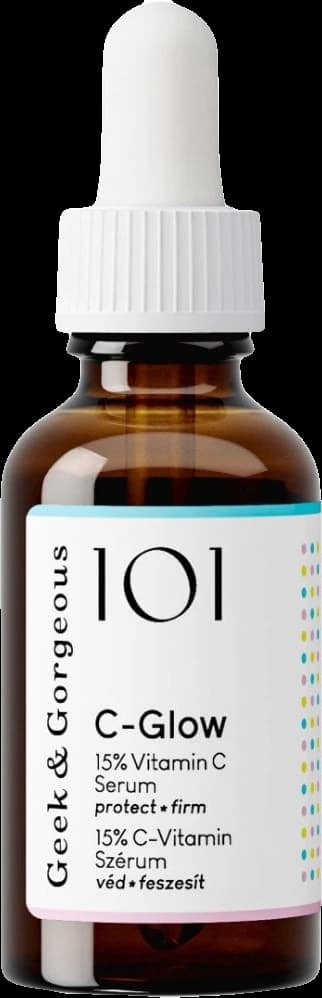
SkinCeuticals C E Ferulic is built on the vitamin C, E and ferulic acid recipe a 2005 study tested, and is our pick if you can afford it. Geek & Gorgeous C-Glow puts the same three antioxidants in a shorter, cheaper serum.Updated - Hyaluronic acid
The Best Hyaluronic Acid Serums
The Ordinary's Hyaluronic Acid 2% + B5 is our pick: hyaluronic acid near the top of a fragrance-free list, now with skin lipids, for very little. Put it on damp skin and seal it with moisturizer.Updated