Avina Picks
Differin Gel Review
Adapalene 0.1%, the prescription retinoid the FDA moved over the counter in 2016, in a plain gel with seven inactive ingredients. The strongest acne evidence of any retinoid on a drugstore shelf, if you start slowly, moisturize and wait three months. The same drug now sells under store brands, and since 2026 with benzoyl peroxide added.
- Adapalene 0.1%, the printed dose
- Seven inactive ingredients, A to Z
- No fragrance, no drying alcohol
Is it good? Our verdict
Yes, for mild to moderate acne, blackheads and clogged pores, if you start a few nights a week, moisturize and give it three months. It is adapalene 0.1%, the prescription retinoid the FDA moved over the counter in 2016, in a plain gel with seven inactive ingredients and no fragrance, no drying alcohol and no exfoliating acid. The trials behind it were run for Galderma's approvals, but they are real trials: in the one the FDA reviewed against the gel alone, 16% of users were clear or almost clear at 12 weeks, against 9%. Expect dryness and a rough first month, and know that the same drug now sells under store brands too.
- Strength stated
- No added fragrance
- No drying alcohol
Pros and cons
Pros
- Adapalene 0.1%, the prescription strength; the AAD's 2024 guidelines strongly recommend topical retinoids for acne
- No fragrance, no drying alcohol and no exfoliating acid on a seven-item inactive list
- Better tolerated than tretinoin in the approval trials, and as mild as petrolatum in 21-day patch tests
- Once a day, a pea-sized amount for the whole face; Galderma told the FDA a 15 g tube is a 30-day supply
Cons
- Dryness, redness and irritation in the first weeks: the label says so, and Reddit adds peeling
- Up to three months to see results, by the label
- Lists methylparaben; La Roche-Posay and some store brands sell the same drug with a different preservative
- The label says to ask a doctor if pregnant or breastfeeding, and the AAD says most experts recommend stopping it in pregnancy
- Every efficacy trial we found was run for Galderma's approvals; we found no independent trial of the gel alone
Who it is for
It is the best retinoid for acne in our retinol guide, the one product there with a Drug Facts label. Here is who it suits:
Good for
- Mild to moderate acne, blackheads, whiteheads and clogged pores, at any age from 12
- Anyone who wants a retinoid with a printed strength and acne trials behind it
- Skin that reacts to fragrance, essential oils or alcohol: the list has none
- Keeping skin clear after a course of antibiotics, which a follow-up trial tested
Skip it if
- You are pregnant, planning to be, or breastfeeding: ask a doctor first, as the label says
- Your acne is deep, painful or scarring: see a dermatologist
- You cannot start slowly or wear sunscreen
- Your goal is wrinkles: adapalene 0.1% is studied for acne
The version we reviewed
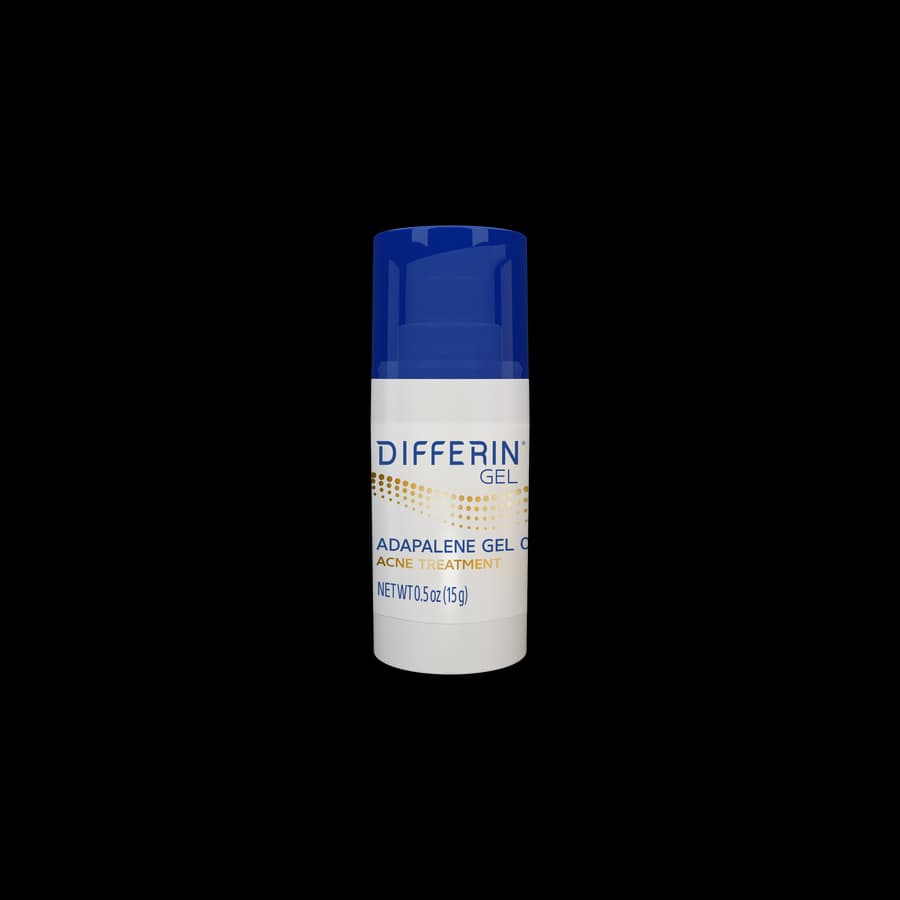
Differin Gel is one formula sold in tubes and pumps. Every fact here is read from its US Drug Facts label as filed with the FDA, including the carton image, and checked against Differin’s own page and the Amazon listing our button opens.
Version reviewed
- Product
- Differin Gel, Adapalene Gel 0.1%, Acne Treatment; 15 g (0.5 oz) and 45 g (1.6 oz) tubes, 15 g and 45 g pumps
- Market
- United States; distributed by Galderma Laboratories, Fort Worth, Texas; made in Canada
- Drug Facts
- Adapalene 0.1%, an OTC acne drug, read on DailyMed (label version 10, December 2022) on October 26, 2026
- Ingredient list
- 7 inactive ingredients, in alphabetical order; “may contain hydrochloric acid to adjust pH”
- Barcode
- 302994920457, the UPC on the 45 g carton in the FDA label (drug code NDC 0299-4910-45); Amazon prints 302994920303 for the 15 g tube
- Directions
- Once a day, a thin layer over the whole affected area; 12 years and older; allow up to 3 months
- Approval
- FDA NDA 020380: a prescription gel from May 1996, over the counter since July 2016
- List history
- Unchanged since the December 2022 label we read; the 0.3% prescription gel swaps poloxamer 182 for poloxamer 124
Sources: DailyMed, Drugs@FDA, the 0.3% gel’s label, Differin’s product page and the Amazon listing. Formulas change; check your pack.
Label facts for Differin Gel
- Retinoid
- Adapalene, 1st of 8 ingredients
- Strength
- 0.1% adapalene
- Added fragrance
- None listed
- Drying alcohol
- None listed
- Supporting
- Nothing notable
- Cruelty-free certified
- No
Read from the US Drug Facts label on DailyMed on October 26, 2026. Labels list ingredients by amount down to 1%, then in any order, so a position is not a percentage. Formulas change; check your box. Cruelty-free certification: the Leaping Bunny and Cruelty Free International directories on October 10, 2026.
Differin Gel ingredients: the full list, mapped
The active ingredient: adapalene 0.1%, printed in the Drug Facts box. The inactive ingredients, as the carton prints them: carbomer 940, edetate disodium, methylparaben, poloxamer 182, propylene glycol, purified water, sodium hydroxide. It may also contain hydrochloric acid, used to adjust pH.
Adapalene does the work: the label’s only use is the treatment of acne. Everything else holds the gel together. Below, each inactive ingredient in the carton’s order, colored by what it does. New to reading a list? Start with our guide to reading an ingredients list.
- Gel-former
- Solvent and humectant
- Dispersing agent
- Preservative
- Stabilizer
- Base: texture, pH and stability
Inactive ingredients, A to Z, as the carton prints them: the order says nothing about amounts
- 1Adapalene 0.1%
- 2Carbomer 940, Gel-former
- 3Edetate Disodium, Stabilizer
- 4Methylparaben, Preservative
- 5Poloxamer 182, Dispersing agent
- 6Propylene Glycol, Solvent and humectant
- 7Purified Water
- 8Sodium Hydroxide
What each one does
Carbomer 940 turns water into a gel; sodium hydroxide (and the optional hydrochloric acid) set its pH, because carbomer thickens only once it is neutralized. Propylene glycol is the solvent that keeps adapalene, which barely dissolves in water, dispersed, and it draws some water to the skin. Poloxamer 182 is a mild surfactant that helps the drug spread evenly. Edetate disodium binds stray metal ions that would spoil the gel. Methylparaben is the preservative: a paraben, 3rd of the inactives only because M comes after E.
What it does not have
No fragrance, no drying alcohol and no exfoliating acid, no oil, no essential oil and no dye: the carton says “Oil Free” and “Fragrance Free”. It also has no glycerin, hyaluronic acid, niacinamide or ceramide, nothing to soften the dryness a retinoid causes. That is why the leaflet talks about moisturizers, and why so many Reddit routines pair it with one.
The paraben question
Methylparaben is one of the most-studied cosmetic preservatives and the FDA has not restricted it, but some people avoid parabens, and the market has noticed: La Roche-Posay’s version of this gel switched to phenoxyethanol by its December 2025 label (DailyMed), CVS, Kroger and other store brands now sell a “Paraben Free” adapalene with benzyl alcohol (DailyMed), and Differin’s own 2026 Epiduo gel has no paraben either (DailyMed). Differin Gel itself still lists methylparaben. If that matters to you, the generics are the same drug.
From prescription to shelf: the FDA record
- 1996: a prescription gel. The FDA approved Differin Gel 0.1% on May 31, 1996 (Drugs@FDA), on trials against tretinoin 0.025% gel in which it cleared lesions at least as well and irritated less (Shalita, 1996; Cunliffe, 1997). A 0.3% gel followed in 2007 and stays prescription-only (Drugs@FDA).
- July 8, 2016: over the counter, at the same strength. The FDA called it the first retinoid approved for OTC use and the first new OTC acne active since the 1980s (FDA, 2016). To earn the switch, Galderma submitted a maximal-use absorption trial, a label comprehension study, a self-selection study of pregnant and breastfeeding women, an actual-use study, and safety data on 5,414 trial subjects plus 20 years of prescriptions (FDA review, 2016). The FDA did not ask for new efficacy trials: the acne indication was already established.
- The one worry in the file was pregnancy. Oral retinoids cause birth defects. The FDA’s reviewers calculated a safety margin of at least 70-fold for topical adapalene used as labeled, and no clear-cut case of retinoid birth defects in the reports, but noted that the women in the self-selection study, most of them breastfeeding, “generally did poorly” at saying they would ask a doctor first (70% of the pregnant-only group said they would), and that 14 people in the actual-use study used it while pregnant or breastfeeding (FDA review, 2016). Hence the label’s line. More in pregnancy.
- Generics followed the switch. Adapalene 0.1% gels approved as prescription generics in 2010 now sell over the counter as store brands (ANDA 090962; ANDA 091314), and a 2024 analysis of sales and prescribing data found the switch raised access and lowered cost (Fix, 2024).
- May 22, 2026: Epiduo joins it. The FDA moved Differin Epiduo, adapalene 0.1% with benzoyl peroxide 2.5%, over the counter as well (Galderma, 2026). See Gel vs Epiduo.
Does Differin work? What the trials show
Every efficacy trial of adapalene 0.1% gel we found was run for Galderma’s approvals, in the US or Japan; we found no independent trial of the gel alone. They are proper randomized trials, reviewed by regulators, and they agree:
- Against the gel alone. In the 653-person trial the FDA used to approve the 0.3% gel, the 0.1% gel was an arm: at 12 weeks 16% were clear or almost clear against 9% on the plain gel, with total lesions down 41.8% against 33.7% and inflamed spots down 49.7% against 40.7% (FDA label; Thiboutot, 2006). In 200 Japanese patients, total lesions fell 63.2% against 36.9% (Kawashima, 2008). The gel base does a surprising amount on its own; the drug adds to it.
- Against tretinoin. A meta-analysis of five trials in 900 people found adapalene 0.1% gel equal to tretinoin 0.025% gel on total lesions at 12 weeks, ahead at week 1, and better tolerated throughout (Cunliffe, 1998); the largest single trial, 323 people, had it ahead at 12 weeks too, 49% against 37% (Shalita, 1996).
- Keeping skin clear. Among 253 people whose severe acne had improved on doxycycline, 16 more weeks on adapalene 0.1% kept 75% at least half improved, against 54% on the gel base (Thiboutot, 2006).
- Where it ranks. An independent network meta-analysis of 40 trials in 18,089 people, funded by the UK’s health research institute, ranked adapalene plus benzoyl peroxide the most effective topical treatment for mild to moderate acne; adapalene alone had a lower drop-out rate than benzoyl peroxide or the combinations, 1.0%. Confidence in the evidence was low (Stuart, 2021). The AAD’s 2024 guideline makes a strong recommendation for topical retinoids (Reynolds, 2024).
- Skin of color. Re-reading five trials by skin color, Galderma’s researchers found similar or larger lesion reductions in Black patients (inflamed spots fell more), with less redness and scaling (Czernielewski, 2002).
Bottom line: it works, modestly on average and better in some people, and it is the best-tested retinoid you can buy without a prescription. Nobody outside Galderma has run a trial of the 0.1% gel alone that we could find.
Purging: what the label and the trials say
The label writes it in: “during the early weeks of use, your acne may appear to worsen before it improves (this is normal); continue using as directed, unless you get irritation that becomes severe” (Drug Facts). The trials are less sure a purge exists. When adapalene trial data were re-read for a retinoid flare after the first week, using two measures, neither showed one (Leyden, 2012, industry-supported), and in its head-to-head trials lesion counts were lower than on tretinoin from week 1 (Grosshans, 1998). Averages hide individuals: the irritation the label describes peaks in the first weeks, and inflamed skin breaks out. Of 64 Reddit users who described getting worse at first, 22 said it passed and 19 said it never did until they quit; see Reddit reviews. The useful rule is the label’s: keep going unless irritation becomes severe, and give it the full 12 weeks before judging.
Dryness, irritation and the “ruined my skin” threads
The label is frank. Irritation, meaning redness, itching, dryness and burning, is more likely in the first few weeks, with more than one topical acne medication, and with abrasive cleansers or drying products; it usually lessens with continued use, which the leaflet puts at after 4 weeks (Drug Facts). Do not wax treated skin. In 21-day patch tests on 55 volunteers by a contract research lab, the gel sat in the same low-irritation group as petrolatum, below six tretinoin products (Galvin, 1998).
Patch tests are not faces used every night. Several of 2026’s busiest Reddit threads about adapalene are complaints: “I ruined my skin with Adapalene”, “differin has ruined my face”, “I damaged my barrier from OTC Adapalene”. We read all of them for the Reddit section; 20 people used the word “barrier” for what went wrong, and their stories share a shape: nightly use from the first day, stinging pushed through, acids or a second acne medication alongside, then weeks of raw skin. The leaflet’s answers are the ones that work: stop if irritation becomes severe and ask a doctor before restarting, use a moisturizer, and avoid alpha hydroxy and glycolic acids. The AAD says a daily moisturizer helps skin tolerate adapalene (AAD), and one of its dermatologists advises starting every other night and building up (AAD). Darker skin has an extra reason to go slowly: irritation can trigger dark marks (AAD).
Pregnancy and breastfeeding
- The label: ask a doctor before use if pregnant or breastfeeding; stop and ask a doctor if you become pregnant or plan to. The leaflet adds that some other retinoids cause birth defects, and that there is no specific evidence adapalene 0.1% used as directed does (Drug Facts).
- The AAD: “Most experts recommend stopping this treatment during pregnancy” (AAD). ACOG advises avoiding topical retinoids in pregnancy (ACOG).
- The FDA’s file: a 70-fold safety margin from the maximal-use trial, and no clear-cut case of retinoid birth defects in 20 years of reports, with the caveat that animal thresholds may not predict humans and that reports are under-reported (FDA review, 2016); the safety analysis published after the switch found no malformations attributable to topical adapalene (Weiss, 2021).
- Breastfeeding: LactMed says it has not been studied, that it is poorly absorbed, and that it is probably a low risk to the infant; use it on the smallest area for the shortest time, never near the nipple, and keep the baby’s skin off treated areas (LactMed).
Our reading: the data are reassuring and the advice is still to stop, because the downside is not worth any amount of clearer skin. Ask your obstetrician; azelaic acid, and benzoyl peroxide in limited amounts, are the acne ingredients the AAD calls safe in pregnancy (AAD).
Differin Gel vs Differin Epiduo (new in 2026)
Since the FDA’s approval on May 22, 2026, Galderma sells a second over-the-counter Differin: Epiduo Acne Gel, adapalene 0.1% with 2.5% benzoyl peroxide in one tube, a prescription product since 2008 (Galderma, 2026; Drugs@FDA). Its label is a different base: ten inactive ingredients, including glycerin, no paraben, “oil-free” and “fragrance free”, in 15 g and 45 g pumps (Drug Facts). It is not yet in our catalog, so no side-by-side table; the label facts are above.
- Evidence: the combination ranked the most effective topical acne treatment in the independent 2021 meta-analysis, ahead of benzoyl peroxide alone, with a drop-out rate of 2.5% against adapalene’s 1.0% (Stuart, 2021). The AAD recommends combining topicals with different mechanisms as good practice (Reynolds, 2024).
- Trade-offs: two irritants instead of one, and benzoyl peroxide bleaches towels, pillowcases and dyed hair. The Epiduo label says to stop it, and the sunscreen it tells you to wear over it, and ask a doctor if irritation or sensitivity develops.
- Which to buy: the Gel if you are new to retinoids or your skin is sensitive; Epiduo for inflamed, pustular acne once you know you tolerate adapalene, or instead of pairing the Gel with a separate benzoyl peroxide wash.
Differin vs La Roche-Posay Effaclar Adapalene Gel 0.1%
La Roche-Posay’s adapalene is sold as a dermatologist brand’s own product, but its FDA label tells a plainer story: the labeler is L’Oréal USA and the drug is Glenmark’s generic, approved in 2010 under ANDA 091314, with “Product of India” on the carton (DailyMed; Drugs@FDA). Its inactive list is Differin’s with one swap: phenoxyethanol for methylparaben, a change made between its January 2023 and December 2025 labels (2023 label).
| Label fact | Differin Gel | La Roche-Posay Effaclar Adapalene Gel 0.1% |
|---|---|---|
| Active ingredient | Adapalene 0.1% | Adapalene 0.1% |
| Inactive ingredients | 7, in alphabetical order | 7, in alphabetical order |
| Preservative | Methylparaben | Phenoxyethanol |
| Once the carbomer’s names are matched | The same list, with methylparaben | The same list, with phenoxyethanol |
| Who makes it | Galderma; made in Canada | L’Oréal’s label on Glenmark’s generic; product of India |
| FDA application | NDA 020380, the original 1996 approval, over the counter since 2016 | ANDA 091314, a generic approved in 2010 |
| Sizes | 15 g and 45 g tubes, 15 g and 45 g pumps | 45 g tube for sale, plus a 3 g sample |
| On the carton | “Previously available only by prescription”, “FDA approved”, “Oil Free”, “Fragrance Free” | “Previously available only by prescription”, “Oil-free. Fragrance-free. Paraben-free” |
| List history | Unchanged since the December 2022 label we read; the 0.3% prescription gel swaps poloxamer 182 for poloxamer 124 | Methylparaben in the January 2023 label; phenoxyethanol by December 2025 |
| Added fragrance | None listed | None listed |
| Where to buy |
Which should you buy? The same drug, the same strength, the same base but for the preservative. Choose on price per gram, on tube size (La Roche-Posay sells a 45 g tube) and on whether you avoid parabens. A generic must match the brand’s active ingredient, strength, form and route and work the same way in the body (FDA); we found no trial comparing the two, and none is needed for the FDA’s purposes.
Store-brand adapalene: the same drug, three makers
Every adapalene 0.1% gel we read traces to one of four FDA approvals, and the store name on the box tells you little. DailyMed lists every adapalene label (DailyMed):
- Galderma, NDA 020380: Differin Gel itself (Drugs@FDA).
- P&L Development, ANDA 090962 (2010): CVS, Walgreens, Kroger, Meijer and Topco store brands, and Neutrogena’s Evenly Clear Retinoid gel, which carries Kenvue’s name and P&L’s approval (Walgreens; Neutrogena; Drugs@FDA). CVS, Kroger, Meijer and Topco also sell a “Paraben Free” version with benzyl alcohol in methylparaben’s place (labels updated September 2026; CVS).
- Glenmark, ANDA 091314 (2010): La Roche-Posay Effaclar Adapalene, above, and Glenmark’s own (Drugs@FDA).
- Sun Pharma Canada, ANDA 215940 (2022): Target’s up&up and PanOxyl’s Adapalene Gel, from Crown Laboratories, both with phenoxyethanol and “Made in Canada” (Target; PanOxyl; Drugs@FDA).
The FDA requires a generic to contain the same active ingredient at the same strength, in the same form, and to work the same way in the body; inactive ingredients may differ (FDA). Here they barely do: each list is Differin’s, give or take the preservative and whether sodium hydroxide is listed or “may contain”. So read the inactive list on the box for the preservative you prefer, and pay for the name only if you want to. We typed no prices: they change weekly, and that is the whole difference.
What the label can’t tell you
- How much of any inactive ingredient there is. The list is alphabetical.
- Whether your first weeks will be rough. The label says they may be; the trials found no average flare. Both are true.
- Whether it will do more for you than the gel alone did in the trials. On average the drug added about 8 points of lesion reduction over the plain gel; some people clear, some do not.
- How it will feel on your skin. We did not test it on skin. What people who used it say is below.
Differin Gel reviews on Reddit
Differin is one of the most-discussed products on skincare Reddit. We read every comment in 24 threads about it, 1,444 in all, from a 2019 five-month review to the 2026 “ruined my skin” threads, and scored each first-hand verdict: of 209 verdicts from 203 people, 92 said it worked, 24 were mixed, 68 said it did not work or they stopped, and 25 were still in their first weeks. Ten of the threads were cries for help, and they hold most of the bad news: outside them, 78 worked against 31 not; inside them, 14 against 37. Opinions are not evidence, but they show what to expect:
- The purge is real for many, and not for all. 64 people described their acne getting worse at first; 22 said it passed, 19 said it never did until they quit, and the rest did not say. “By week 11 my skin was clear; but it started improving by week 8” (2026 thread); “It happened in the second and third weeks and calmed down in the fourth. You just gotta stick it out” (2021 thread).
- Dryness first, then the barrier. 38 reported dryness, peeling or flaking, 11 burning or stinging, and 20 used the word “barrier” for what went wrong; 25 stopped because of a side effect. “you do get full blown face dandruff, so I used a cerave moisturiser during this time along with an SPF” (2026 thread). The barrier stories read alike: “I pushed through stinging and wrecked my barrier and have to restart my journey now” (2026 thread); “Never stopped purging even after 12+ weeks so I stopped using it assuming my skin barrier was compromised and I needed to reset” (2026 thread).
- Slow starts and moisturizer. 42 people started every other night or a few nights a week, and 28 put moisturizer under or around it; two said the sandwich backfired. “I started in too fast and my skin became sore even to the most gentle skincare. I cut back to just two times a week” (2026 thread). “So I would suggest putting mositruizer and then the Differin. That’s how I do it and Adapelene is literally my holy grail product” (2026 thread).
- Patience, in months. Of 26 people who said when they saw improvement, 5 said under 4 weeks, 16 said 1 to 3 months, 4 said 3 to 6 months and 1 said longer. “my face did look much better about 2.5 months in. It was like a switch had turned on, no new acne formed” (2019 thread). “Differin saved my skin! It took a few months for real improvement but now I only get the occasional non-cystic pimple” (2024 thread).
- When it fails, it can fail hard. “it absolutely destroyed my skin for over a year and it was not the "purge"” (2026 thread). 39 people switched to tretinoin or were told to by a dermatologist; 3 of them came back.
- Eyes. 8 people reported irritation around the eyes, lips or mouth corners, three of them dry eye: “It was great for my acne but it gave me chronic dry eye, win some lose some” (2026 thread). The label says to keep it away from the eyes, lips and mouth.
- Brand or generic. Of 109 verdicts that named a product, 102 said Differin, though Reddit uses the name for any adapalene; 5 used a store brand or another brand and 2 La Roche-Posay. One found the opposite of what you would expect: “For some reason name brand differin didn’t agree with my skin but the neutrogena adapalene worked great” (2026 thread).
The biggest thread, “Let’s be honest: Adapalene / Differin” (2026, 151 comments), was among the most positive, 35 worked to 8 not (thread); the complaint threads are the most negative (one, another). Read both kinds before you decide, and the slow start that the happy ones share.
How to use Differin Gel
- Clean gently and pat dry. The label says so; the leaflet adds a mild, non-irritating cleanser, not an abrasive one (Drug Facts). Our acne face wash guide has fragrance-free picks.
- A pea-sized amount, in a thin layer over the whole face, not on single spots: it works by keeping pores clear, so it has to cover the skin that breaks out. Keep it off the eyes, lips and mouth corners, and wash your hands after.
- Once a day, and start slowly. The label allows once daily; a dermatologist quoted by the AAD advises every other night at first, building up (AAD).42 of the Reddit users we read started every other night or two to three nights a week.
- Moisturize. The leaflet allows a moisturizer and the AAD says a daily one helps skin tolerate adapalene (AAD). Apply it before, after, or both; the “sandwich” is the buffer 28 of the Reddit users we read used in the first weeks.
- Sunscreen every morning, and limit sun and tanning beds, as the label says. If you apply the gel by day, let it dry before sunscreen. Our sensitive-skin sunscreen picks suit retinoid skin.
- One acne medication at a time while your skin adjusts, and no alpha hydroxy or glycolic acids, no waxing of treated skin, and no use on cuts, eczema or sunburn, all from the label. Benzoyl peroxide pairs well once you tolerate adapalene; see Gel vs Epiduo.
- Give it 3 months. That is the label’s own timeline. If irritation becomes severe, stop and ask a doctor; if there is no improvement after 3 months of daily use, ask a doctor.
- Store it at room temperature, 68 to 77 °F, and protect it from freezing.
Alternatives worth a look
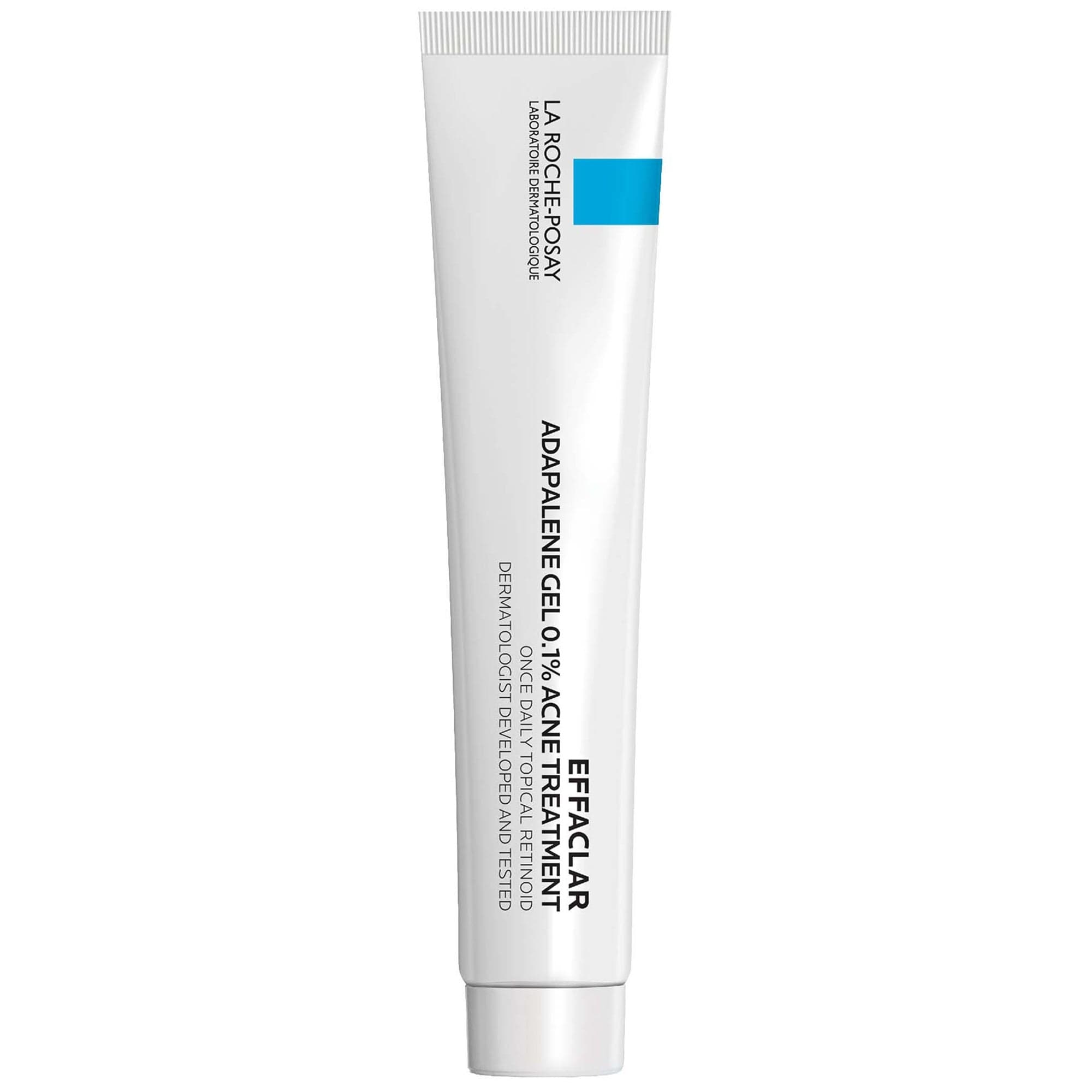
La Roche-Posay Effaclar Adapalene Gel 0.1%
The same drug and the same list but for the preservative, phenoxyethanol instead of methylparaben: Glenmark’s generic under La Roche-Posay’s name. See the side-by-side.
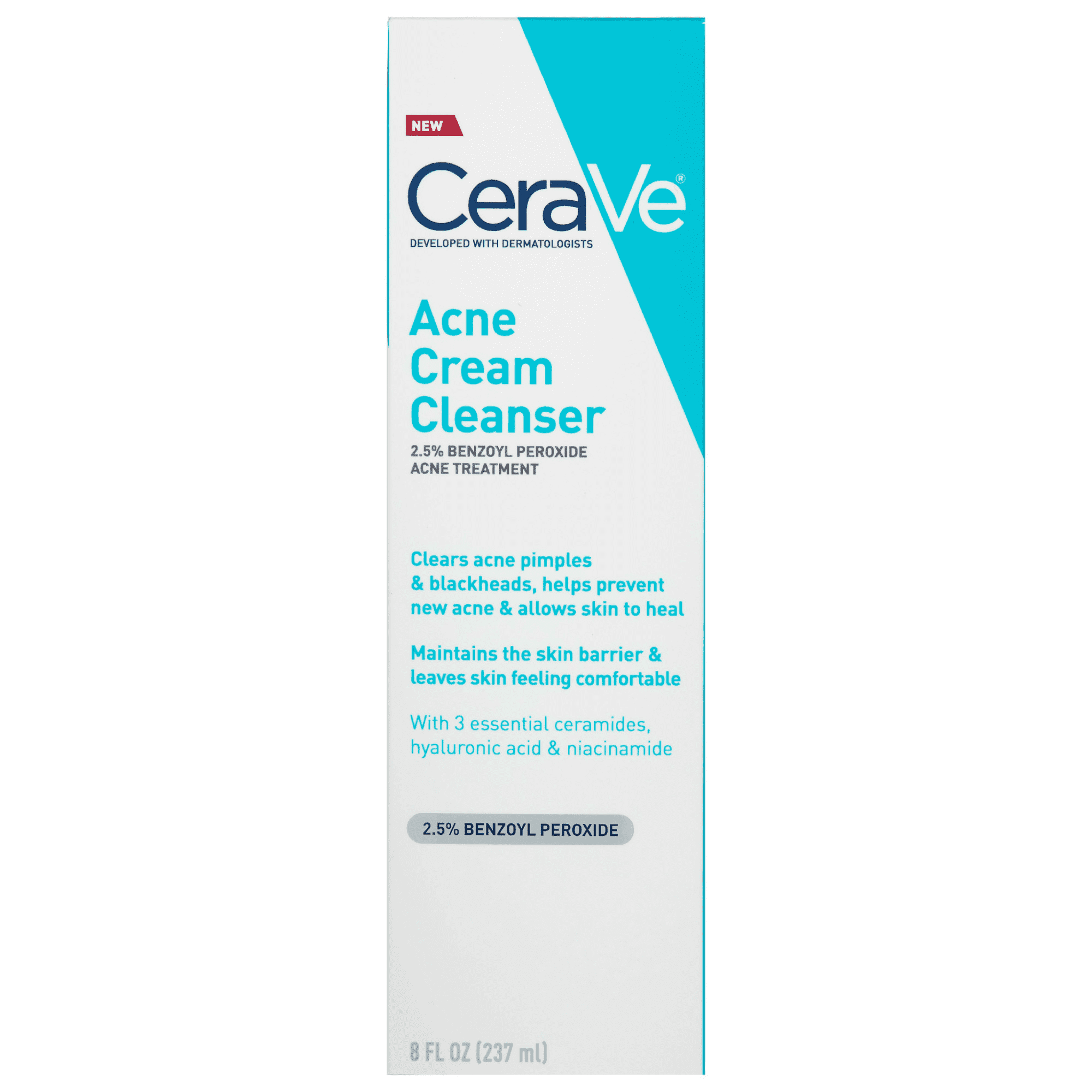
CeraVe Acne Foaming Cream Cleanser
4% benzoyl peroxide in a wash with ceramides, the morning partner the AAD suggests for a night-time retinoid. Our best overall acne face wash.
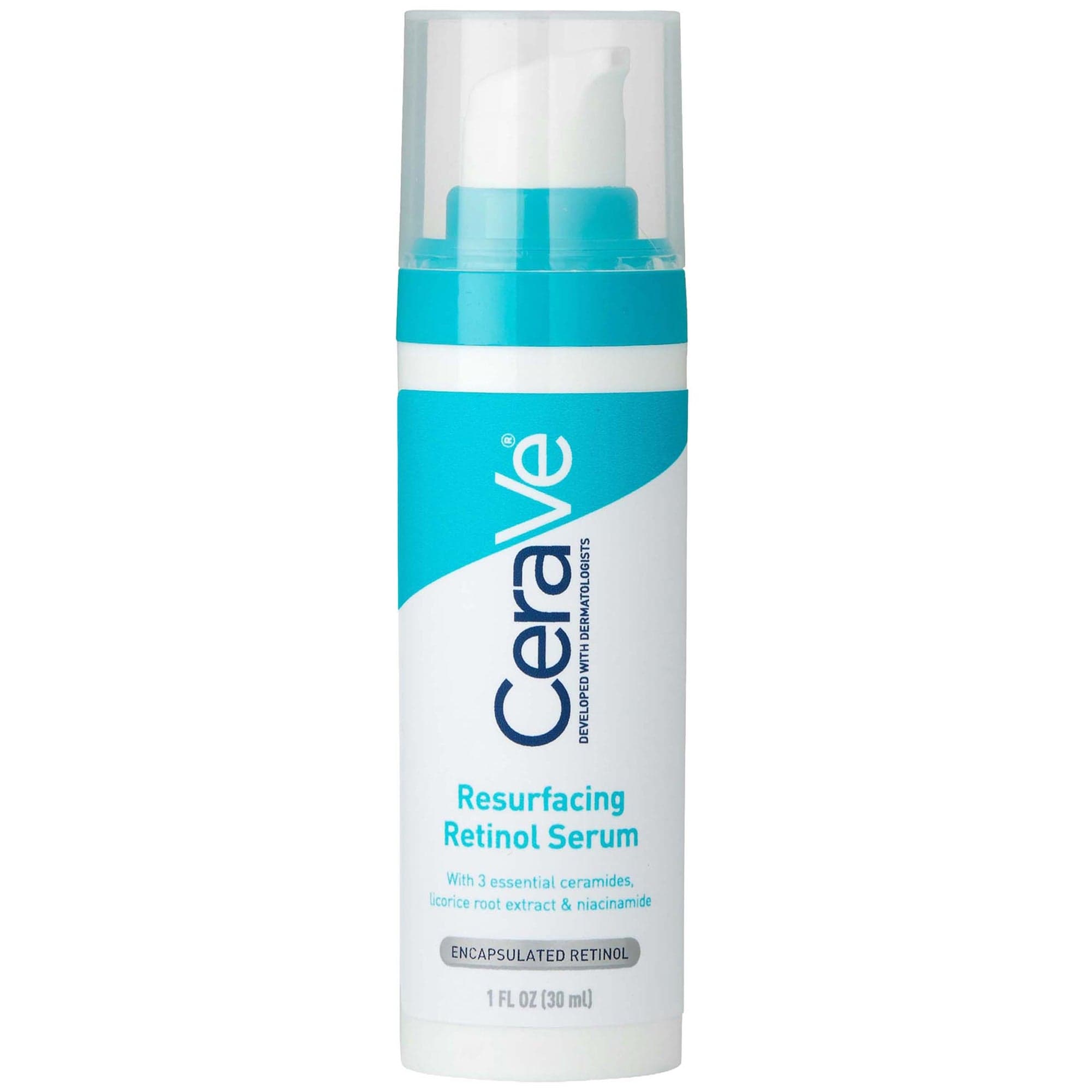
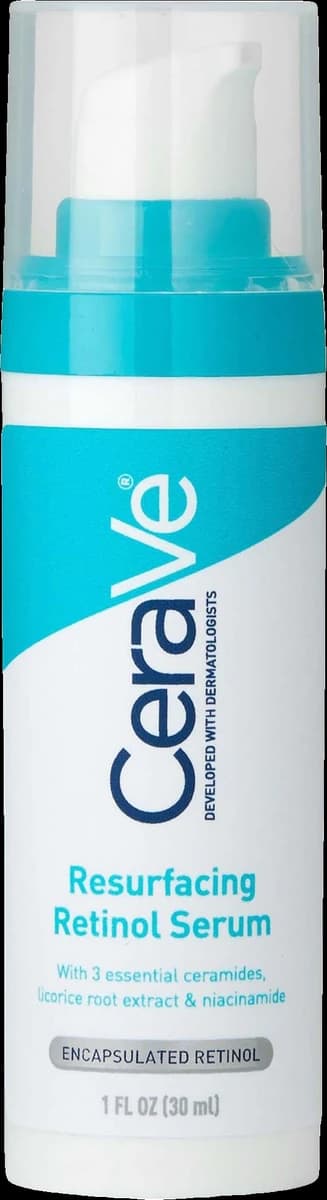
CeraVe Resurfacing Retinol Serum
Encapsulated retinol with ceramides and niacinamide, for the marks acne leaves rather than acne itself; a gentler step if adapalene is too much. Our review.
How we reviewed it, and why you can trust it
We read the US Drug Facts on DailyMed, including the carton images, the FDA’s 2016 summary review of the switch and its approval record, the DailyMed labels behind Differin, Epiduo, La Roche-Posay and the store brands we name and the approvals behind them, Differin’s own page and the Amazon listing our button opens. We read the abstracts of the trials behind the 1996 approval and the 2006 trials, the 0.3% label’s trial table, the 2021 network meta-analysis, the AAD’s 2024 guideline and patient pages, LactMed, the reviews that rank on Google’s first page, Drugs.com’s user reviews, and Reddit through an archive.
- Every ingredient position, count and flag from today’s US labels is generated from them, not typed by hand.
- Every health claim links to its source, and studies paid for by a company say so.
- Galderma did not pay for this review or send us a product, and commission never decides what we say.
- We did not test it on skin, so there is no star rating.
Our full method explains what we check and why. For more options, read our best retinol picks.
Questions people ask
Is Differin Gel good for acne?
Yes, on the evidence. It is adapalene 0.1%, a topical retinoid, and the AAD’s 2024 acne guidelines make a strong recommendation for topical retinoids (Reynolds, 2024). In the 12-week trial the FDA reviewed, 16% of people on adapalene 0.1% gel were clear or almost clear, against 9% on the gel alone, with total lesions down 42% against 34% (FDA label, 2023); in a Japanese trial, lesions fell 63% against 37% (Kawashima, 2008). Those trials were Galderma’s. It suits blackheads, whiteheads and mild to moderate acne; deep, painful or scarring acne needs a dermatologist (AAD). We did not test it on skin.
How long does Differin take to work?
The label says it may take up to 3 months of once-daily use, and to ask a doctor if there is no improvement after 3 months (Drug Facts). In Galderma’s trials, lesion counts were already lower at week 1 and 2 than on tretinoin (Grosshans, 1998; Shalita, 1996), but the results people notice came at 8 to 12 weeks. The AAD’s rule for any acne treatment is 4 to 6 weeks for some improvement and 2 to 3 months or more to clear (AAD). Of 26 Reddit users who said when they improved, 16 said 1 to 3 months (Reddit reviews).
Does Differin cause purging? Is it normal for acne to get worse at first?
The label expects it: “during the early weeks of use, your acne may appear to worsen before it improves (this is normal)” (Drug Facts). As a group effect it is hard to find: when Galderma re-read its trial data for a flare after week 1, neither of two measures showed one (Leyden, 2012), and lesion counts fell from week 1 in its comparisons with tretinoin (Grosshans, 1998). Individuals are not averages: of 64 Reddit users we read who described getting worse at first, 22 said it passed and 19 said it never did (Reddit reviews). The label’s line is to continue unless irritation becomes severe.
How do you use Differin Gel?
Clean the skin gently and pat dry, then cover the whole affected area with a thin layer once a day; if your acne is on the face, apply it to the entire face. It is not a spot treatment, and more than once a day will not work faster but may irritate (Drug Facts). Differin’s own page says a pea-sized amount (Differin). A dermatologist quoted by the AAD advises the least-intense retinoid, every other night to start, building up slowly (AAD). Our step-by-step adds the moisturizer and sunscreen.
Should I apply Differin in the morning or at night?
Either, once a day, at the same time each day, says the leaflet; Differin’s page says AM or PM but not both (Drug Facts; Differin). Most people use it at night: the label asks you to limit sun exposure and use sunscreen when outdoors, and if you apply it by day, to let it dry before sunscreen. Unlike tretinoin, adapalene stayed stable in light and next to benzoyl peroxide in a lab test by Galderma (Martin, 1998).
Can I use Differin every day?
Once daily is the label’s direction, and daily use is what the trials behind the approval used (Drug Facts). The catch is the first weeks, when the label says irritation is most likely; it also says irritation usually lessens with continued use, and the leaflet says after 4 weeks. A dermatologist quoted by the AAD advises every other night at first (AAD), and 42 of the Reddit users we read started every other night or two to three nights a week and worked up.
Can I use a moisturizer with Differin? Before or after?
Yes: the leaflet says a moisturizer may help decrease dryness and other signs of irritation, and asks you to avoid products with alpha hydroxy or glycolic acids (Drug Facts). The AAD says using a moisturizer every day helps skin tolerate adapalene (AAD). The label does not set an order. One of Reddit’s most-repeated tips is moisturizer first, Differin on top, and moisturizer again if needed, the “sandwich”, which buffers the gel; we found no trial of whether it costs any effect. Fragrance-free picks are in our oily-skin and face moisturizer guides.
Can I use Differin with benzoyl peroxide, like PanOxyl?
Yes, with care, and since summer 2026 you can buy both in one tube: Differin Epiduo Acne Gel, adapalene 0.1% with 2.5% benzoyl peroxide, which the FDA moved over the counter on May 22, 2026 (Galderma, 2026; Drug Facts). In an independent network meta-analysis of 40 trials, adapalene plus benzoyl peroxide ranked the most effective topical option, with a slightly higher drop-out rate than adapalene alone (Stuart, 2021). Adapalene did not break down next to benzoyl peroxide in Galderma’s lab test (Martin, 1998). The Drug Facts warn that irritation is more likely with more than one acne medication at a time, so a common plan is a benzoyl peroxide wash such as PanOxyl in the morning and Differin at night.
Can I use Differin with niacinamide, vitamin C, salicylic acid or glycolic acid?
Niacinamide, yes; it is a common pairing and nothing on the label argues against it. The leaflet says to avoid products containing alpha hydroxy or glycolic acids, which may worsen irritation, and that irritation is more likely with abrasive cleansers, drying products or a second acne medication (Drug Facts). Salicylic acid is an acne medication, so the same caution applies: use one at a time if your skin reacts. Vitamin C in the morning and Differin at night keeps them apart. Our guide to mixing ingredients goes through each pair.
Differin vs tretinoin: which is better?
Against tretinoin 0.025% gel, the strength it was tested against, adapalene 0.1% gel was as effective and better tolerated in a meta-analysis of five trials in 900 people, and it worked faster in the first week (Cunliffe, 1998); in the largest single trial it cleared more lesions, 49% against 37% (Shalita, 1996). In 21-day patch tests it irritated no more than petrolatum, while six tretinoin products did (Galvin, 1998). All of that comes from the trials behind Galderma’s approvals and a contract lab’s patch tests. Tretinoin comes in stronger strengths by prescription, and for wrinkles it has far more evidence. Of the retinoids you can buy without a prescription, adapalene is the one with acne trials behind it.
Differin vs retinol: what is the difference?
Retinol is a cosmetic ingredient that skin must convert before it works, sold at any strength a brand likes and often without one printed. Adapalene is an FDA-approved drug at a printed 0.1%, with a Drug Facts label and acne trials behind it (FDA, 2016). For acne, Differin; for fine lines, retinol has the studies and adapalene 0.1% the label says nothing about wrinkles. Our retinol guide covers both, and why a printed strength matters.
Differin Gel vs Differin Epiduo: which should I buy?
Differin Gel is adapalene 0.1% alone; Differin Epiduo adds 2.5% benzoyl peroxide in a different, paraben-free base, and reached shelves in 2026 after the FDA moved it over the counter (Drug Facts; Galderma). The combination ranked more effective than benzoyl peroxide alone in the independent 2021 meta-analysis, at the cost of a slightly higher drop-out rate (Stuart, 2021). Start with the Gel if your skin is sensitive or you are new to retinoids; consider Epiduo for inflammatory acne once you tolerate adapalene, and expect benzoyl peroxide to bleach towels. More in our comparison.
Is store-brand adapalene the same as Differin?
The same drug at the same strength: a generic must match the brand’s active ingredient, strength, dosage form and route and work the same way in the body, while inactive ingredients can differ (FDA). Three generic makers hold the approvals behind the store brands we read: P&L Development (CVS, Walgreens, Neutrogena Evenly Clear and others), Glenmark (La Roche-Posay) and Sun Pharma (Target’s up&up, PanOxyl Adapalene) (DailyMed). Their lists are Differin’s, give or take the preservative (phenoxyethanol or benzyl alcohol in place of methylparaben) and whether sodium hydroxide is listed or “may contain”. See the generics section.
Does Differin help with wrinkles or anti-aging?
The OTC label is for acne only, in people 12 and older (Drug Facts). Adapalene is a retinoid, and the AAD lists it among retinoids used for acne while tretinoin carries the wrinkle evidence (AAD). The studies people cite for adapalene and wrinkles used the 0.3% prescription gel; we found none of the 0.1% gel on facial wrinkles. If lines are the goal, our retinol picks are built for that question.
Does Differin fade dark spots and acne scars?
Not by its label, which names only acne. Fewer breakouts mean fewer new marks, and in Galderma’s pooled trials Black patients had similar or larger lesion reductions (inflamed spots fell more) with less redness and scaling than white patients (Czernielewski, 2002), which matters because irritation can trigger dark marks in darker skin (AAD). For the marks acne leaves, see our dark spot corrector picks; pitted scars need a dermatologist.
Can I use Differin while pregnant or breastfeeding?
The label says to ask a doctor before use if pregnant or breastfeeding, and to stop and ask a doctor if you become pregnant (Drug Facts). The AAD says most experts recommend stopping adapalene during pregnancy (AAD), and ACOG advises avoiding topical retinoids (ACOG). The FDA’s reviewers found a 70-fold safety margin and no clear-cut case of retinoid birth defects in 20 years of reports, which they note are under-reported, but worried that the pregnant and breastfeeding women in the consumer studies “generally did poorly” at saying they would ask a doctor, though 70% of the pregnant-only group said they would (FDA, 2016). For breastfeeding, LactMed calls it probably a low risk, applied to the smallest area, never near the nipple (LactMed). Details in our pregnancy section.
What are the side effects of Differin? Why does it burn?
Redness, itching, dryness and burning, most likely in the first few weeks and when another acne medication, an abrasive cleanser or a drying product is used at the same time; the label says irritation usually lessens with continued use (Drug Facts). Stop and ask a doctor if it becomes severe, or at any sign of allergy (hives, swelling of the lips or eyelids, shortness of breath). Keep it off the eyes, lips and mouth, do not wax treated skin, and limit sun. Drugs.com’s 350 user reviews list peeling, dry skin and burning among the most-mentioned side effects, after acne itself (Drugs.com).
Can Differin damage your skin barrier?
Used too fast, it can leave skin raw: that is the irritation the label describes, and several of 2026’s busiest Reddit threads about adapalene are “I ruined my skin” stories (our section). 20 of the people we read used the word for what went wrong, and their stories describe starting nightly from the first day, pushing through stinging, or adding acids. The leaflet’s own fix is to stop if irritation becomes severe and ask a doctor before restarting, to moisturize, and to avoid glycolic and alpha hydroxy acids (Drug Facts). In 21-day patch tests the gel was as mild as petrolatum (Galvin, 1998); real faces, used every night, are another matter.
Can teenagers use Differin? What about under 12?
The label is for adults and children 12 years of age and older; for children under 12, ask a doctor (Drug Facts). The FDA’s approval covers 12 and up (FDA, 2016).
What are the ingredients in Differin Gel?
The active is adapalene 0.1%. The seven inactive ingredients, in the alphabetical order the label prints: carbomer 940, edetate disodium, methylparaben, poloxamer 182, propylene glycol, purified water, sodium hydroxide; it may contain hydrochloric acid to adjust pH (Drug Facts). Because the list is alphabetical, the order says nothing about amounts. There is no fragrance, oil, alcohol or exfoliating acid. See the full map.
Who makes Differin, and where?
Galderma Laboratories of Fort Worth, Texas, distributes it, and the carton says “Made in Canada” (Drug Facts). Galderma, based in Zug, Switzerland, developed adapalene and first had it approved as a prescription gel in 1996 (Drugs@FDA). Galderma’s site says adapalene has been prescribed to over 40 million people in more than 20 years (Differin).
Is the Differin on Amazon the same, and what about the 87% claim?
The listing our button opens is the 15 g tube, sold by Amazon.com, with the same Drug Facts text as the label and the UPC 302994920303 (Amazon). Its description says the gel “can help reduce up to 87% of acne in just 12 weeks”, citing Cunliffe 1998. That meta-analysis’s abstract reports equivalence to tretinoin and faster early results and gives no 87% figure, and we could not find where the number comes from (Cunliffe, 1998); the average reductions in the trials the FDA reviewed were 42% to 49% at 12 weeks (FDA label; Shalita, 1996). “Up to” is doing the work.
Sources
- DailyMed: Differin Gel (adapalene gel 0.1%) Drug Facts label
- FDA: FDA approves Differin Gel 0.1% for over-the-counter use to treat acne (2016)
- FDA Center for Drug Evaluation and Research: Division Director Summary Review, Differin Gel 0.1% (adapalene) NDA 20-380 S-010, prescription-to-OTC switch (2016)
- Drugs@FDA: Differin (adapalene) Gel 0.1%, NDA 020380, approval history
- DailyMed: Differin (adapalene) Gel 0.3% prescribing information, Clinical Studies (2023)
- 21 CFR 201.66: format and content requirements for over-the-counter drug labeling (eCFR)
- Galderma: Galderma receives U.S. FDA approval for Differin Epiduo Acne Gel prescription-to-OTC switch (May 22, 2026)
- DailyMed: Differin Epiduo Acne Gel (adapalene 0.1% and benzoyl peroxide 2.5%) Drug Facts label (2026)
- DailyMed: La Roche-Posay Effaclar Adapalene Gel 0.1% Drug Facts label (December 2025)
- DailyMed: La Roche-Posay Effaclar Adapalene Gel 0.1% Drug Facts label (January 2023)
- DailyMed: CVS Adapalene Gel USP 0.1%, Paraben Free, Drug Facts label (September 2026)
- DailyMed: Walgreens Adapalene Gel USP 0.1% Drug Facts label (August 2026)
- DailyMed: Target up&up Adapalene Gel USP 0.1% Drug Facts label (September 2025)
- DailyMed: Neutrogena Evenly Clear Retinoid Adapalene Gel 0.1% Drug Facts label (April 2026)
- DailyMed: PanOxyl Adapalene Gel 0.1% Drug Facts label (August 2025)
- DailyMed: every US label for adapalene (search results)
- Drugs@FDA: Adapalene gel 0.1%, ANDA 090962 (P and L Development), approved 2010
- Drugs@FDA: Adapalene gel 0.1%, ANDA 091314 (Glenmark), approved 2010
- Drugs@FDA: Adapalene gel 0.1%, ANDA 215940 (Sun Pharma Canada), approved 2022
- FDA: Generic Drug Facts
- Drugs@FDA: Differin (adapalene) Gel 0.3%, NDA 021753, approval history
- Drugs@FDA: Epiduo (adapalene and benzoyl peroxide) Gel, NDA 022320, approval history
- Reynolds et al.: Guidelines of care for the management of acne vulgaris, Journal of the American Academy of Dermatology (2024)
- Shalita et al.: A comparison of the efficacy and safety of adapalene gel 0.1% and tretinoin gel 0.025% in the treatment of acne vulgaris: a multicenter trial, Journal of the American Academy of Dermatology (1996)
- Cunliffe et al.: Clinical efficacy and safety comparison of adapalene gel and tretinoin gel in the treatment of acne vulgaris: Europe and U.S. multicenter trials, Journal of the American Academy of Dermatology (1997)
- Grosshans et al.: Evaluation of clinical efficacy and safety of adapalene 0.1% gel versus tretinoin 0.025% gel in the treatment of acne vulgaris, with particular reference to the onset of action and impact on quality of life, British Journal of Dermatology (1998)
- Cunliffe, Poncet, Loesche and Verschoore: A comparison of the efficacy and tolerability of adapalene 0.1% gel versus tretinoin 0.025% gel in patients with acne vulgaris: a meta-analysis of five randomized trials, British Journal of Dermatology (1998)
- Galvin et al.: Comparative tolerance of adapalene 0.1% gel and six different tretinoin formulations, British Journal of Dermatology (1998)
- Thiboutot et al.: Adapalene gel 0.3% for the treatment of acne vulgaris: a multicenter, randomized, double-blind, controlled, phase III trial, Journal of the American Academy of Dermatology (2006)
- Thiboutot et al.: Adapalene gel, 0.1%, as maintenance therapy for acne vulgaris: a randomized, controlled, investigator-blind follow-up of a recent combination study, Archives of Dermatology (2006)
- Kawashima et al.: Adapalene gel 0.1% is effective and safe for Japanese patients with acne vulgaris: a randomized, multicenter, investigator-blinded, controlled study, Journal of Dermatological Science (2008)
- Czernielewski et al.: Efficacy and cutaneous safety of adapalene in black patients versus white patients with acne vulgaris, Cutis (2002)
- Leyden, Preston, Johnson and Gottschalk: Effects of topical retinoid therapy on acne lesions: a psychometric assessment, Cutis (2012)
- Weiss, Mallavalli, Meckfessel, Griffin and Wagner: Safe use of adapalene 0.1% gel in a non-prescription environment, Journal of Drugs in Dermatology (2021)
- Fix, Desai and Nussbaum: Rx-to-OTC switch increased access and lowered cost of topical adapalene, Archives of Dermatological Research (2024)
- Stuart et al.: Topical preparations for the treatment of mild-to-moderate acne vulgaris: systematic review and network meta-analysis, British Journal of Dermatology (2021)
- Martin et al. (Galderma): Chemical stability of adapalene and tretinoin when combined with benzoyl peroxide in presence and in absence of visible light and ultraviolet radiation, British Journal of Dermatology (1998)
- LactMed (U.S. National Library of Medicine): Adapalene
- American Academy of Dermatology: Is any acne treatment safe to use during pregnancy?
- American College of Obstetricians and Gynecologists: Skin conditions during pregnancy
- American Academy of Dermatology: 9 things to try when acne won't clear
- American Academy of Dermatology: Adult acne treatment dermatologists recommend
- American Academy of Dermatology: Moisturizer, why you may need it if you have acne
- American Academy of Dermatology: Retinoid or retinol?
- Differin: Differin Gel, adapalene 0.1% acne treatment (product page)
- Amazon: Differin Acne Retinoid Treatment Gel, 0.1% Adapalene, 15 g tube (listing)
- Drugs.com: Differin user reviews and ratings for acne
- Reddit, r/SkinbarrierLovers: "Let's be honest: Adapalene / Differin" (2026)
- Reddit, r/SkincareAddicts: "4 weeks on Differin" (2024)
- Reddit, r/30PlusSkinCare: "Differin purge tanking my confidence" (2026)
- Reddit, r/acne: "One month of differin gel!" (2021)
- Reddit, r/30PlusSkinCare: "Differin.... that's it." (2026)
- Reddit, r/SkinbarrierLovers: "I ruined my skin with Adapalene and I'm so sad" (2026)
- Reddit, r/SkinbarrierLovers: "About to start Differin on sensitive skin. Tell me your absolute biggest 'DO NOT DO THIS' tips so I don't destroy my face?" (2026)
- Reddit, r/acne: "differin has ruined my face" (2026)
- Reddit, r/SkincareAddiction: "[review] 5 months with Differin" (2019)
- Reddit, r/SkincareAddiction: "[B&A] Week 8 on Differin and feeling good" (2020)
- Reddit, r/acne: "Think twice before using differin. Taken 4 months apart." (2021)
- Reddit, r/30PlusSkinCare: "Dermatologist told me (36f) that he won't prescribe tretinon because differin has been working just fine for me" (2024)
Written by Avina Picks. Not clinically reviewed, and not a treatment plan: ask a dermatologist about a skin condition, a prescription, pregnancy or breastfeeding.
A retinoid works on the nights you use it
Avina keeps your morning and evening routines with your real products, and records the nights you did them, so a slow start with a retinoid stays on track.

More from Avina Picks
- Retinol
The Best Retinol Serums and Creams
Start with a disclosed low strength and a fragrance-free formula. Our pick for most people is Paula's Choice 0.3% Retinol; on a budget, CeraVe's Resurfacing Retinol Serum.Updated - Acne face wash
The Best Face Washes for Acne
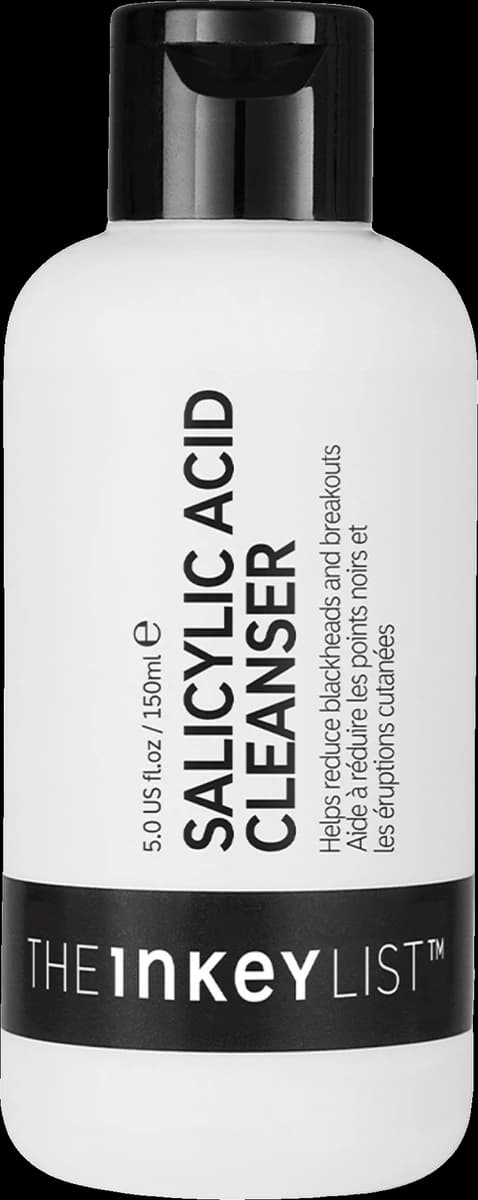
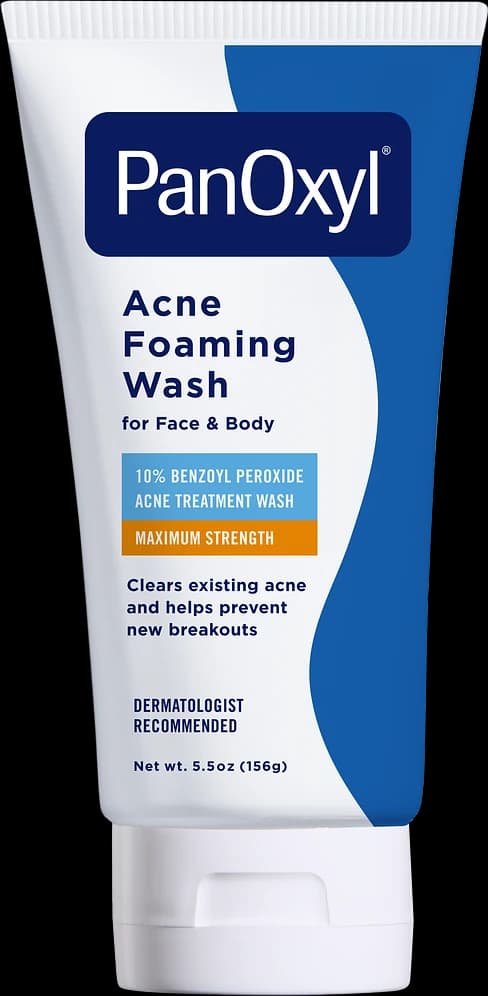
CeraVe's Acne Foaming Cream Cleanser is our pick: 4% benzoyl peroxide in a cream wash with ceramides, and no fragrance. For salicylic acid, The Inkey List's 2% cleanser; for body acne, PanOxyl's 10% wash.Updated - Oily skin
The Best Moisturizers for Oily Skin
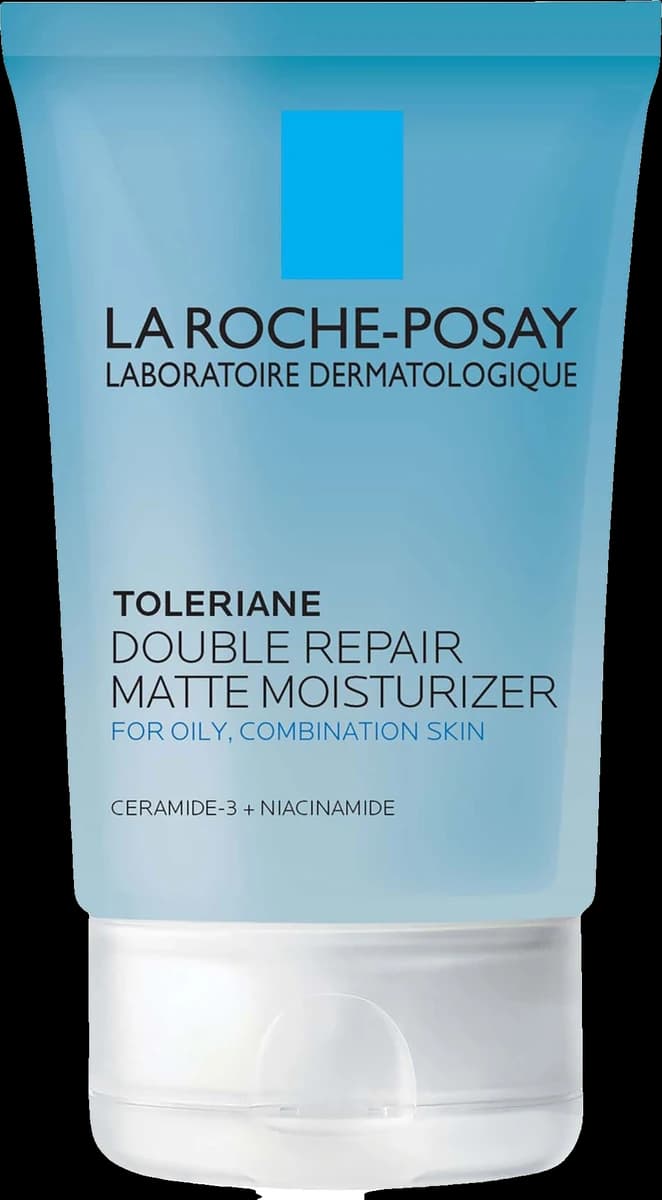
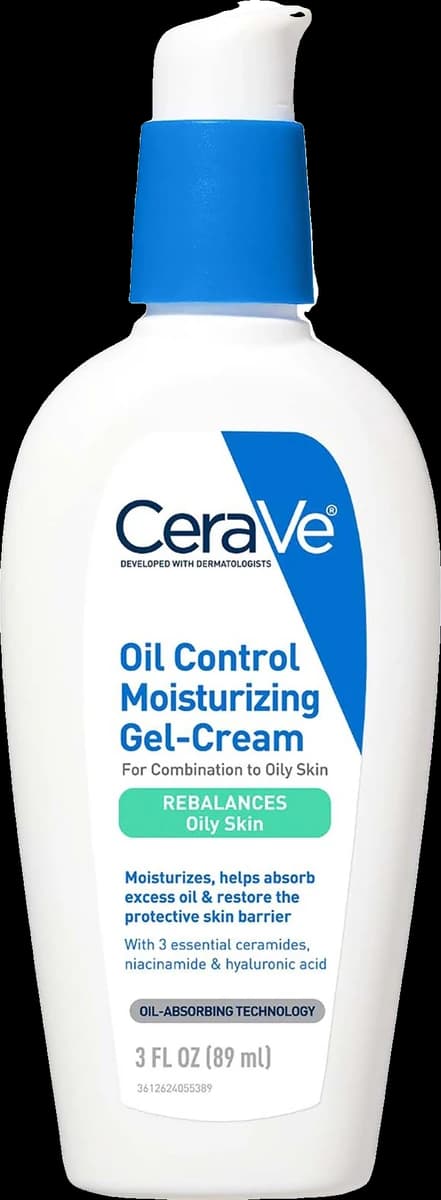
La Roche-Posay's Toleriane Double Repair Matte is our pick: 16 ingredients, with silica, corn starch and perlite to soak up oil, niacinamide, and no fragrance. For ceramides as well, CeraVe's Oil Control Gel-Cream; for oily but dehydrated skin, The Ordinary's Natural Moisturizing Factors + Beta Glucan.Updated